
Goldbach's conjecture explained
4 = 2 + 2, 6 = 3 + 3, 8 = 3 + 5, 10 = 5 + 5 = 3 + 7, and so on, apparently forever. That every even number above 2 is the sum of two primes is one of the easiest statements in mathematics to understand, and after more than 280 years still one of the hardest to prove.
A letter to Euler
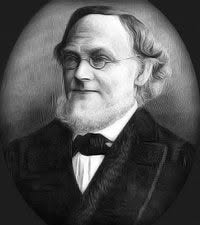
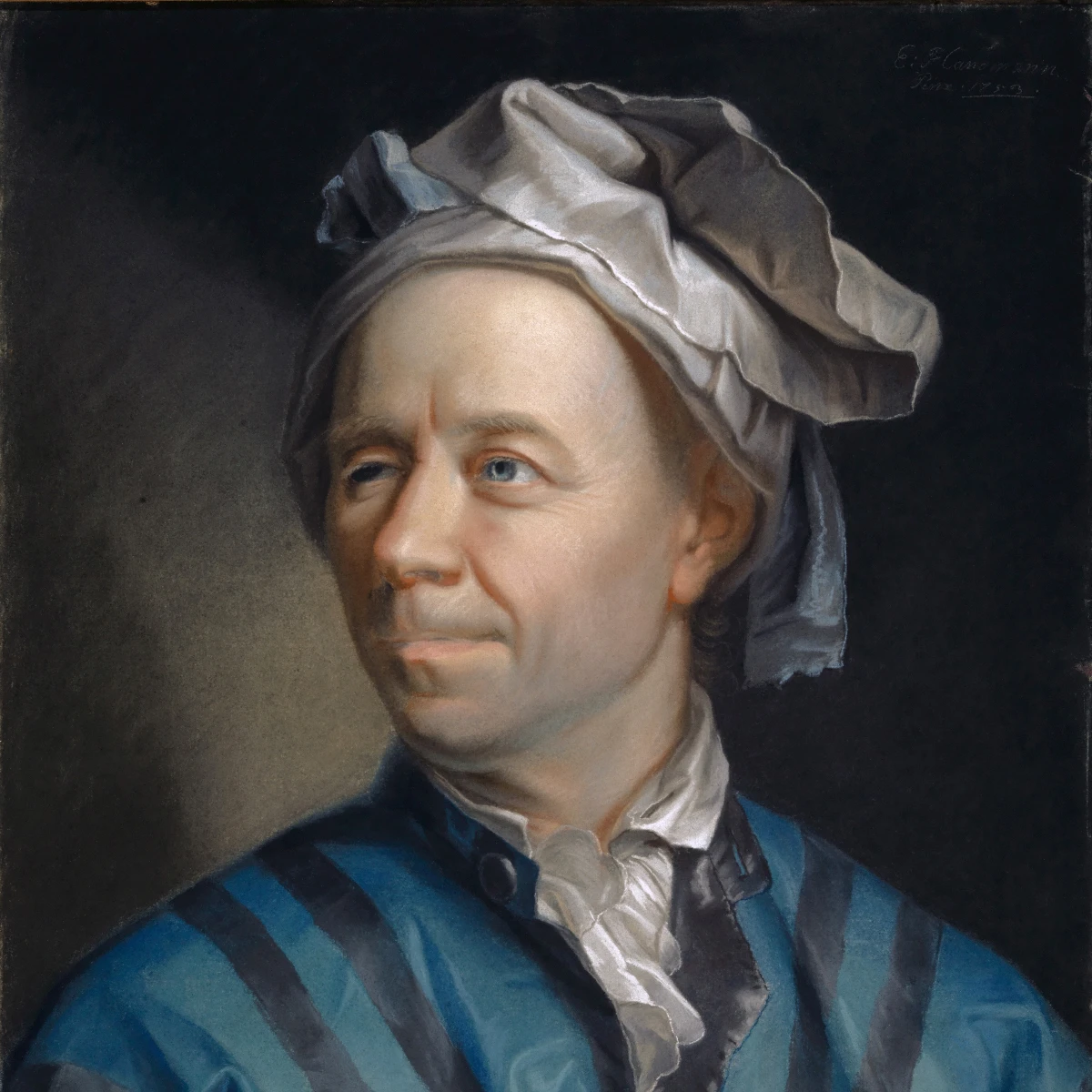
On 7 June 1742 the Prussian mathematician Christian Goldbach wrote to Leonhard Euler that every integer greater than 2 seemed to be the sum of three primes; in his day 1 was still counted as a prime. Euler replied on 30 June that this would follow from a simpler statement, which he called a completely certain theorem although he could not prove it: every even number is the sum of two primes. That statement, for even numbers greater than 2, is what we now call Goldbach's conjecture.
Splits
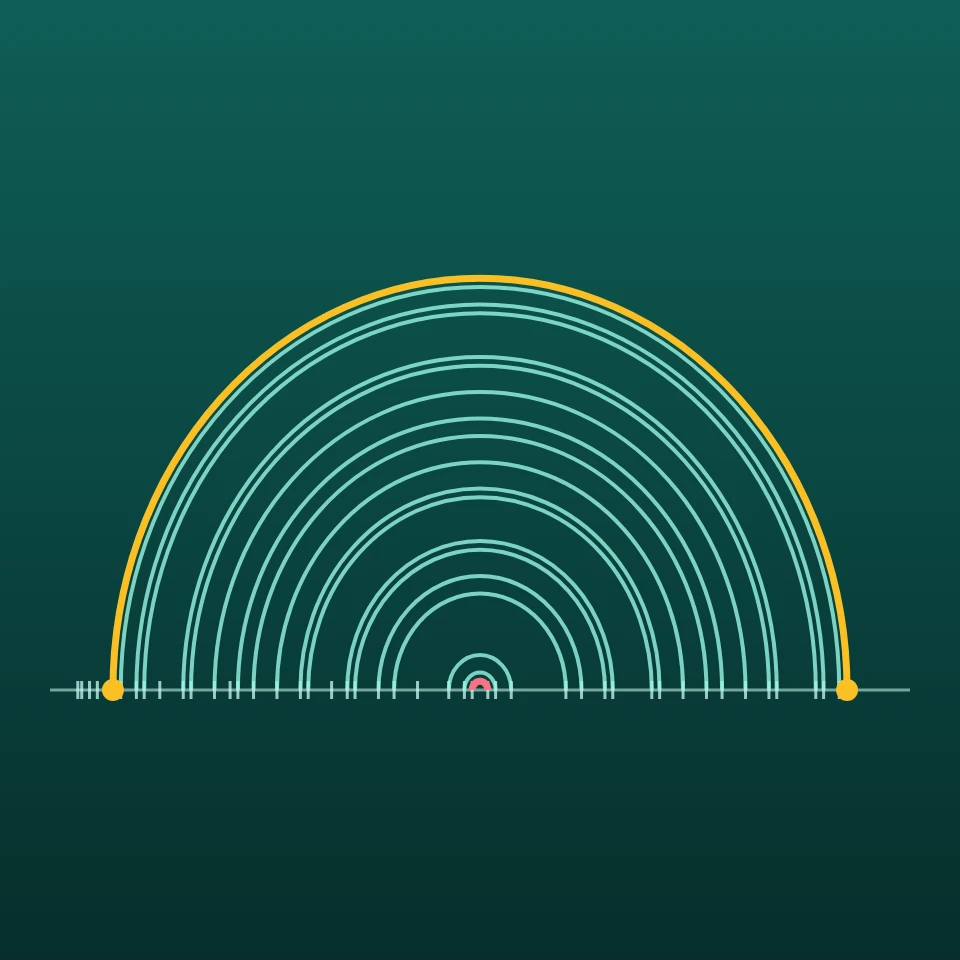
A way to write n as p + q with p and q prime is called a Goldbach partition, or here a split; 3 + 7 and 7 + 3 count once. 10 has two splits, 100 has six and 1,000,000 has 5,402. Only 4, 6, 8 and 12 have just one, as far as anyone has checked. The odd numbers are different: since one of two primes adding up to an odd number must be 2, an odd n is the sum of two primes only when n − 2 is prime.
Checked up to 4 × 10^18
Checking a number does not need all its splits, only one. Starting from p = 3 and testing whether n − p is prime almost always succeeds within a few dozen tries, so computers can check numbers far faster than they could list splits. In 2013 Tomás Oliveira e Silva, Siegfried Herzog and Silvio Pardi finished checking every even number up to 4 × 10^18. Along the way they found the hardest one: 3,325,581,707,333,960,528 needs p = 9,781 before n − p is prime.
Goldbach's comet and Hardy–Littlewood
Plot the number of splits of every even number and the dots form a widening band called Goldbach's comet. It has separate strands because the prime factors of n matter: when 3 divides n, no n − p is a multiple of 3 for a prime p above 3, so such numbers have more splits. In 1923 G. H. Hardy and J. E. Littlewood predicted the count: about 0.66 · n/(ln n)², where 0.66 is the twin prime constant, raised by (p − 1)/(p − 2) for every odd prime p that divides n. Their formula is a conjecture too, but it matches the counts to within about one percent for large n.
What has been proved
In 1937 Ivan Vinogradov proved that every large enough odd number is the sum of three primes, and in 2013 Harald Helfgott brought the bound down to every odd number greater than 5, settling this weak Goldbach conjecture. For the even version, mathematicians showed in 1938 that almost all even numbers are sums of two primes, so exceptions, if any, are vanishingly rare. In 1973 Chen Jingrun proved that every large enough even number is the sum of a prime and a number that is either prime or the product of two primes. The last step, to two primes every time, is still missing.
Explore it
Open the tester and type any even number up to 4 × 10^18. The table shows each prime tried and why n − p failed, until the first split; the tiles add the split closest to n/2 and Hardy and Littlewood's estimate of the number of splits. Up to 10 million every split is drawn as an arc from p to n − p. Pick a hard case to see a long search, or switch to the comet to see the splits of every even number up to 200,000.
Frequently asked questions
Can 2 be one of the primes?
Only for 4 = 2 + 2. For any larger even number, 2 + q = n would make q even and larger than 2, so not prime. Every other split uses two odd primes.
Why is it so hard to prove?
The primes are defined by multiplication, but the conjecture is about addition, and there are few tools that connect the two. Methods that show almost every even number works, or that a prime plus an almost-prime works, so far always leave a small gap.
Was there ever a prize for a proof?
Yes. To promote the novel Uncle Petros and Goldbach's Conjecture, its publishers Faber and Faber and Bloomsbury offered one million dollars for a proof submitted between March 2000 and March 2002. Nobody claimed it.
What if a counterexample exists?
It would have to be larger than 4 × 10^18, and it would have no splits at all, while the even numbers around it each have about 10^15. Hardy and Littlewood's formula makes that look extremely unlikely, but likely is not proved.
Related tools
Goldbach conjecture tester
Test Goldbach's conjecture on any even number up to 4 × 10^18: find the two primes, see every split as an arc, compare the count with Hardy and Littlewood's formula and plot Goldbach's comet.
Prime gap explorer
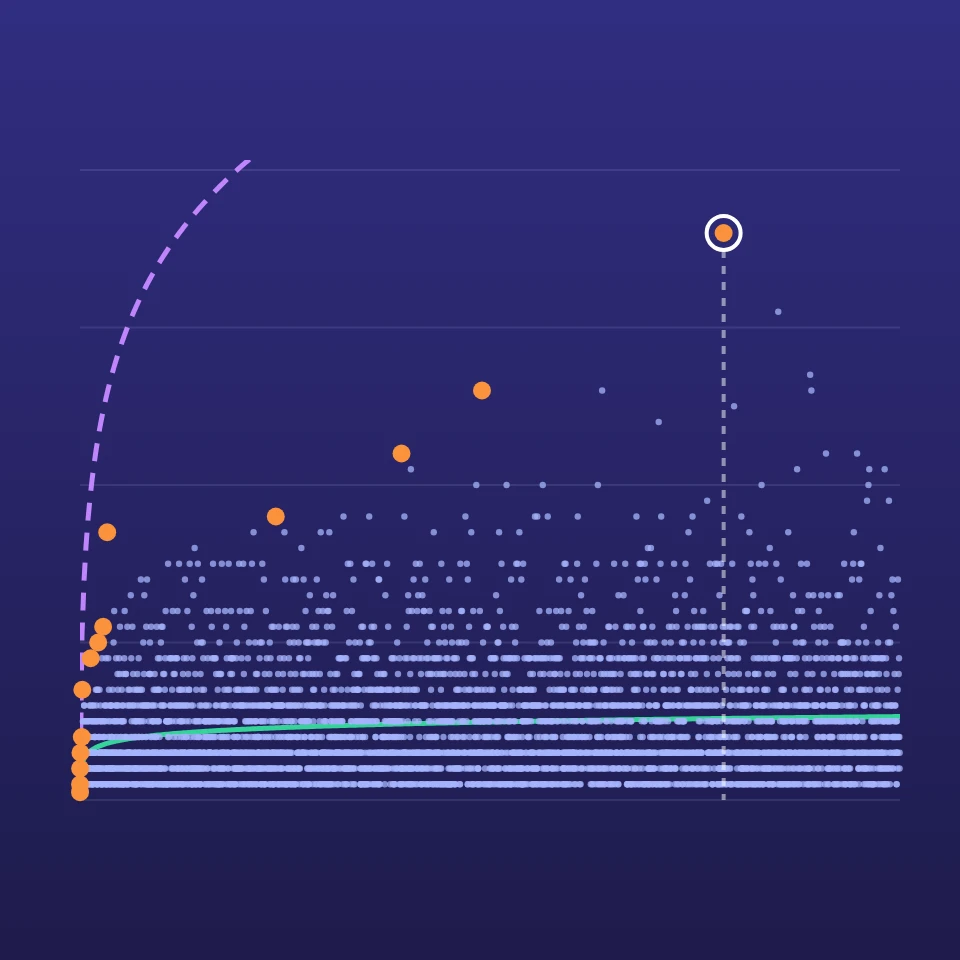
Plot the gap between every pair of consecutive primes in any range up to 2 trillion. Compare it with ln p and Cramér's (ln p)², count twin primes, see how often each gap occurs and jump to the record gaps.
Prime gaps explained
What prime gaps are, why the average gap near p is ln p, how large gaps can get, twin primes and the bounded gaps theorem, merit, maximal gaps and Cramér's conjecture.
Sieve of Eratosthenes
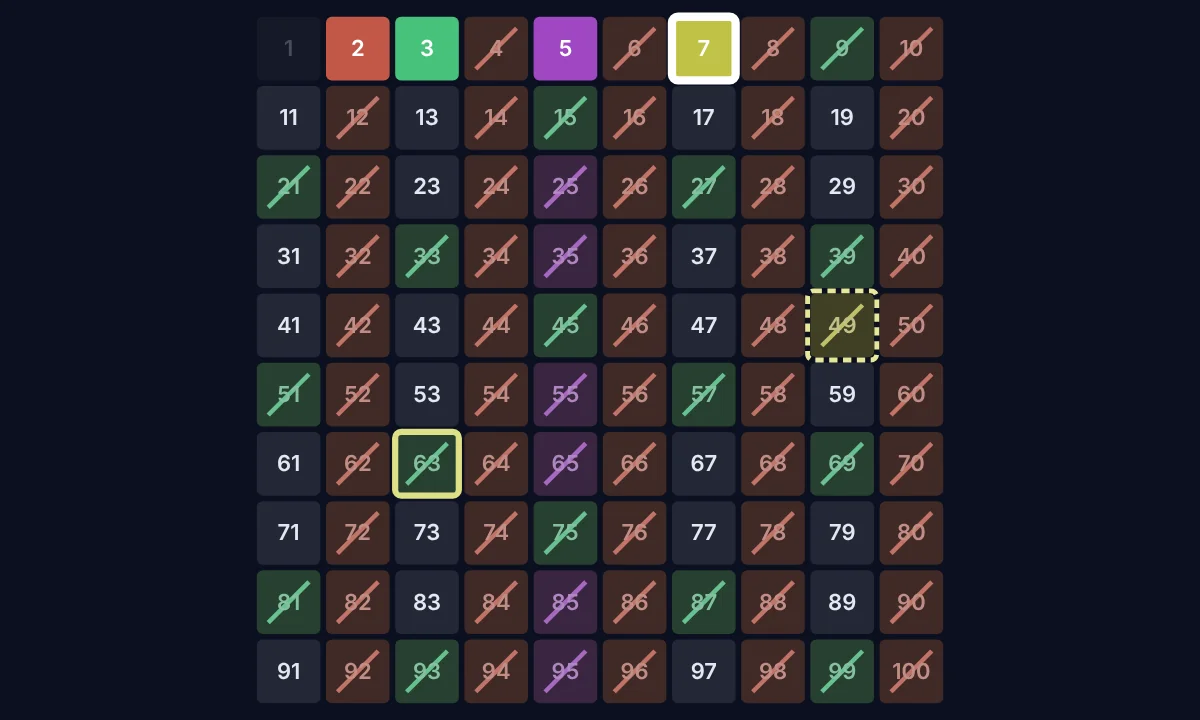
Watch the Sieve of Eratosthenes find the prime numbers up to 100, 200, 500 or 1000. Each prime crosses out its multiples in its own colour, step by step.
Fermat's Last Theorem
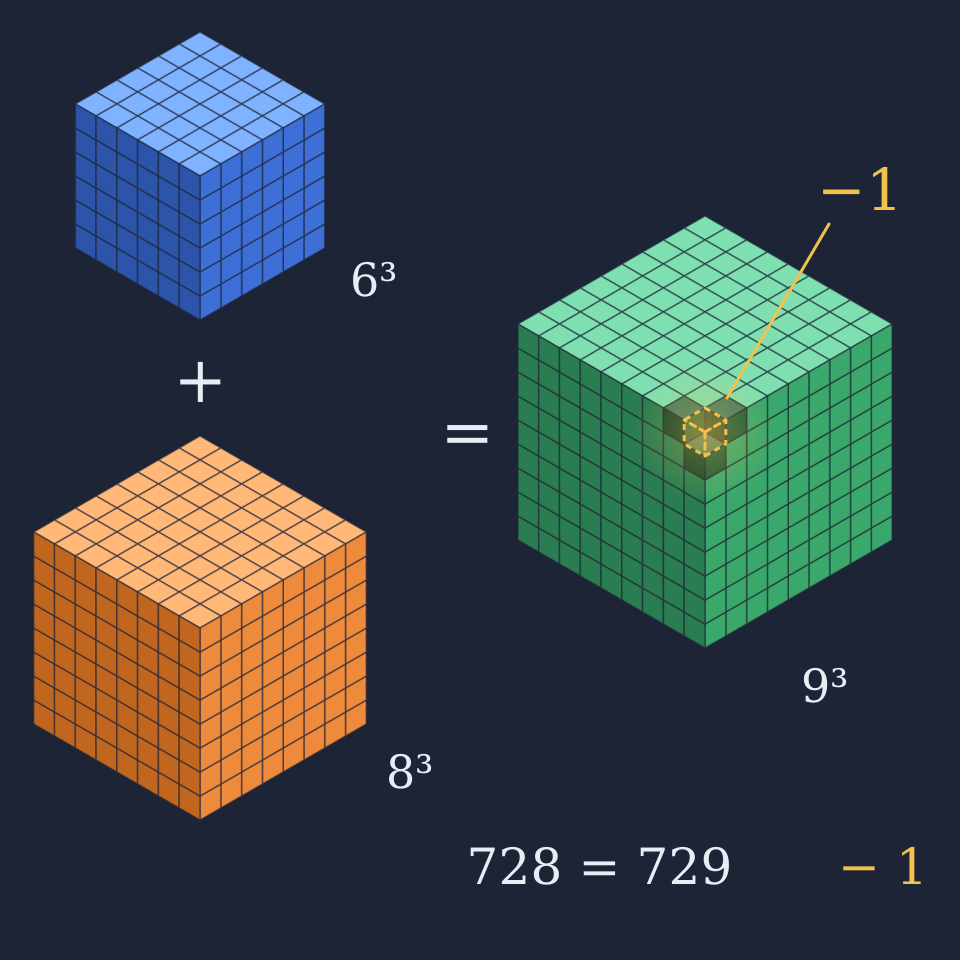
A free check of aⁿ + bⁿ = cⁿ for positive integers. See the Pythagorean triples for squares, and for every larger exponent the exact gap, including the near-miss from The Simpsons.
Ready to try it?
Open PictorX in your browser — no install, no credit card required to start.
Test Goldbach's conjecture