
Tides: the Moon, the Sun and the sea
Twice a day, on most coasts, the sea rises and falls by a metre or more, and in the Bay of Fundy by more than ten. The cause is gravity, but not simply the Moon pulling the water towards it: it is the difference between the Moon's pull on the near side of the Earth, on its centre and on the far side, which stretches the oceans into two bulges that the Earth turns through. Here you can watch the bulges follow the Moon, see the Sun strengthen or weaken them, follow a harbour round the turning Earth and read its tide on a graph made from the same harmonic constituents that tide tables use. Press Play and watch a month of tides. On the left the Earth is seen from above the North Pole, turning once a day under two bulges of water: one on the side facing the Moon and one on the far side. The arrows show why: the Moon pulls the near side of the Earth a little harder than its centre and the far side a little less, and what is left after taking away the pull on the centre, which only swings the whole Earth round the Earth–Moon barycentre, points outwards on both sides. The Sun does the same, less than half as strongly. When the Sun, the Earth and the Moon are in line, at new and full moon, the bulges add up to spring tides; at the quarters they work against each other and give neap tides. The harbour, the yellow dot, passes through both bulges every 24 hours 50 minutes, the tidal day, so most coasts have two high tides a day. The side view shows the Moon north or south of the equator, which makes the two high tides of a day unequal. The graph shows the water level from the harbour's five main tidal constituents: pick a harbour to compare the North Sea, the huge tides of the Bay of Fundy, the once-a-day tides of the Gulf of Mexico and the tiny tides of the Mediterranean. Drag the Moon round its orbit or drag along the graph to move in time; Step and Back move by an hour. Tidal friction shows how the bulges run ahead of the Moon, slowing the Earth and pushing the Moon away. With Sound on the sea washes against the quay; Record films it with the sound.
How it works
- Press Play: the Earth turns under the two bulges of water and the harbour, the yellow dot, passes through high and low tide twice a day.
- Watch the arrows: the Moon's pull minus its pull on the Earth's centre points outward on the near and far sides, and the Sun's smaller arrows add to the Moon's at new and full moon and work against them at the quarters.
- Read the tiles and the graph: the water level now, the next high and low tide, the tidal range, whether it is a spring or a neap tide, and the Moon's phase.
- Pick another harbour, such as the Bay of Fundy or the Gulf of Mexico, drag the Moon round its orbit or along the graph, switch on Tidal friction, and switch Sound on to hear the sea and record a video.
Why there are two bulges
Gravity weakens with distance, so the Moon pulls the side of the Earth facing it a little more strongly than the Earth's centre, and the far side a little less. The pull on the centre only keeps the Earth swinging round the Earth–Moon barycentre, a point about 4,670 km from the Earth's centre, inside the Earth, and every part of the Earth takes part in that motion. What is left over, the tidal force, points towards the Moon on the near side and away from it on the far side, and squeezes the oceans inward at the sides. The water is drawn into two bulges, one under the Moon and one opposite, and the Earth turns through both every day.
Spring tides and neap tides
The tidal force grows with the mass of the body but falls with the cube of its distance. The Sun is 27 million times heavier than the Moon but 390 times farther away, so its tidal force is only about 46 % of the Moon's: the Moon wins by a factor of about 2.2. When the Sun, the Earth and the Moon are in line, at new and full moon, the solar bulges add to the lunar ones and the tides are larger: spring tides. At first and last quarter they are at right angles and partly cancel: neap tides. In many places the spring tide arrives a day or two after new or full moon, a delay called the age of the tide.
The tidal day and the two daily tides
The Moon moves along its orbit as the Earth turns, so a harbour needs about 24 hours 50 minutes to come back under the Moon: high water comes about 50 minutes later every day, twice in each tidal day. The Moon also moves up to about 28° north and south of the equator. Then the bulges are tilted, and a harbour away from the equator passes through the thick part of one bulge and the thin part of the other: the two high tides of a day are unequal, the diurnal inequality. Near the Moon's greatest declination some coasts have only one high tide a day.
A real harbour's tide
The oceans cannot keep up with bulges sweeping round the Earth at more than 1,600 km an hour at the equator, and the continents are in the way. Instead the tide moves through each ocean basin as long waves that swing round points of no tide and resonate in bays, so every harbour has its own tide. Tide tables describe it as a sum of harmonic constituents, each a regular wave with a period set by the motions of the Moon and the Sun and an amplitude and phase found from years of measurements: M2, the main lunar tide every 12 hours 25 minutes, S2, the solar tide every 12 hours, N2 from the Moon's changing distance, and K1 and O1, the once-daily tides from the declination. The Bay of Fundy, tuned to M2, has the largest range on Earth; the Gulf of Mexico has mainly one tide a day; most of the Mediterranean only a few tens of centimetres.
Frequently asked questions
Why are there two high tides a day and not one?
Because there are two bulges. The Moon pulls the near side of the Earth more than its centre and its centre more than the far side. Taking away the pull on the centre, which moves the whole Earth, leaves a stretch outward on both sides: one bulge faces the Moon and one points away from it. As the Earth turns, a coast passes through both, so it has two high and two low tides in each tidal day of 24 hours 50 minutes.
Why does the Moon cause bigger tides than the Sun?
Tides come from the difference in a body's pull across the Earth, and that difference falls with the cube of the distance, not the square. The Sun's gravity on the Earth is about 180 times the Moon's, but because it is about 390 times farther away its tidal force is only about 0.46 of the Moon's. In the simulator the Sun's arrows are less than half as long as the Moon's.
What are spring and neap tides?
Spring tides are the larger tides around new and full moon, when the Sun and the Moon pull along the same line and their bulges add up. Neap tides are the smaller tides around first and last quarter, when they pull at right angles. The cycle repeats every 14.8 days. Spring tides have nothing to do with the season; the word means the water springs up. When a spring tide comes while the Moon is near perigee, its closest point, the range is larger still: a perigean spring tide or king tide.
Why is high tide later every day?
While the Earth turns once, the Moon moves about 12° further along its orbit in the same direction, so the Earth has to turn for another 50 minutes or so to bring a place back under the Moon. The tidal day therefore lasts about 24 hours 50 minutes, and each high tide comes about 25 minutes later than half a day after the one before.
Where are the biggest tides in the world?
In the Bay of Fundy in Canada, where the range between low and high water can exceed 16 metres. The bay's natural period of sloshing, about 13 hours, is close to the 12 hours 25 minutes of the main lunar tide, so the tide resonates and grows as it runs up the narrowing bay. Large tides are also found in the Bristol Channel, the Bay of Mont-Saint-Michel and Ungava Bay, while the Mediterranean and the Baltic have tides of only some centimetres to a few tens of centimetres.
Can I use the picture?
Yes. Save gives a PNG at the size you choose, and the pencil opens the picture in the PictorX photo editor with the background, the sunlight, the Moon's orbit, the Earth, the ocean bulge, the tidal forces, the Moon, why two bulges, the side view, the harbour, the tide graph and the labels on layers of their own, and the harbour's name and the time as editable text. In the editor itself it is under Apps ▸ Science ▸ Space & Earth ▸ Tides. Everything runs in your browser.
Tides: how do I record a video?
Press the red Record button in the playback bar: it films what the stage shows. Press it again to stop, and the video is saved to your device. Recording is free; you only need to sign in. Without a subscription the video carries a small PictorX logo in a corner. The button beside Record opens the video options: the shape (as shown, square, story 9:16 or wide 16:9), the length (until you stop, or 5, 10, 15 or 30 seconds for social media) and the file: MP4, WebM or an animated GIF. For the sound, choose the app's own sounds or one of three music tracks: calm, bright or beat.
Related tools
Tides explained
How tides work: the tidal force as the difference of gravity across the Earth, why there are two bulges, the Earth–Moon barycentre, why the Moon wins over the Sun, spring and neap tides, the tidal day, diurnal inequality, real harbours and harmonic constituents, the Bay of Fundy, and how tidal friction slows the Earth and pushes the Moon away.
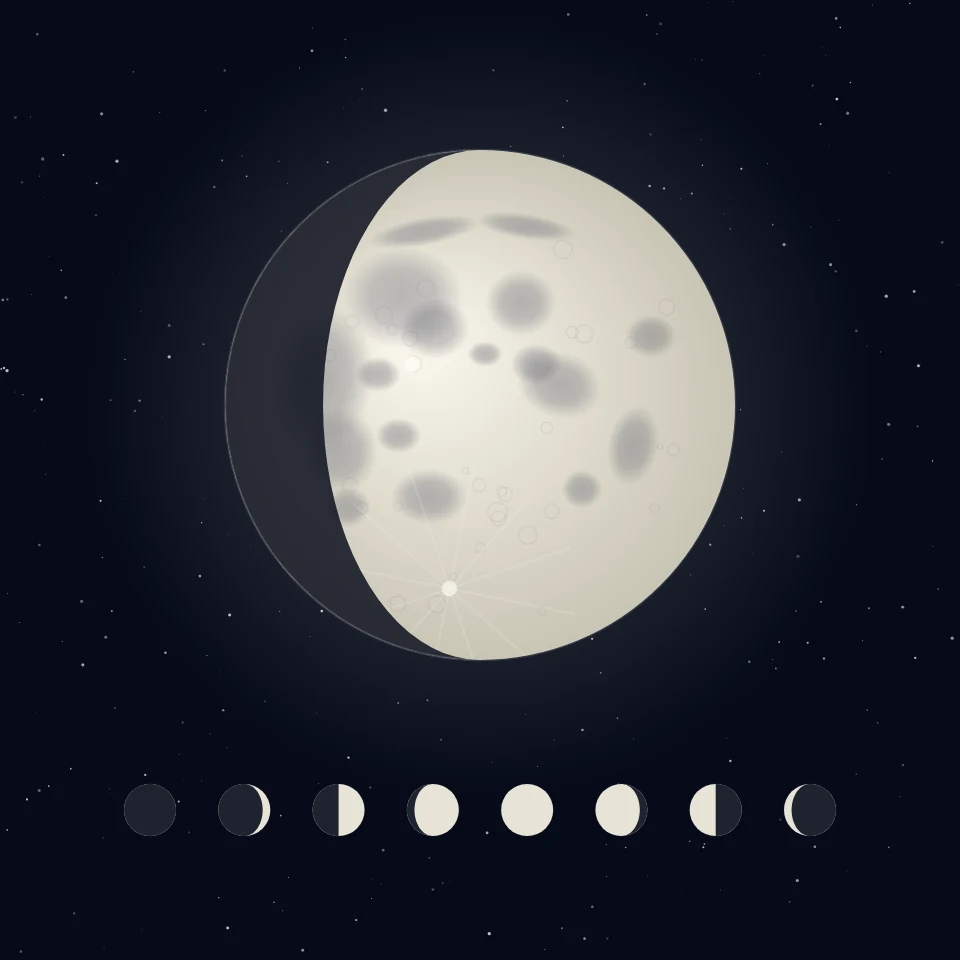
Moon phases for any date
See tonight's Moon or the Moon on any date: the phase and its name, how much is lit, the Moon's age, moonrise and the next full and new moon. An interactive Sun–Earth–Moon model shows why the Moon has phases, the synodic and sidereal month and when eclipses happen.
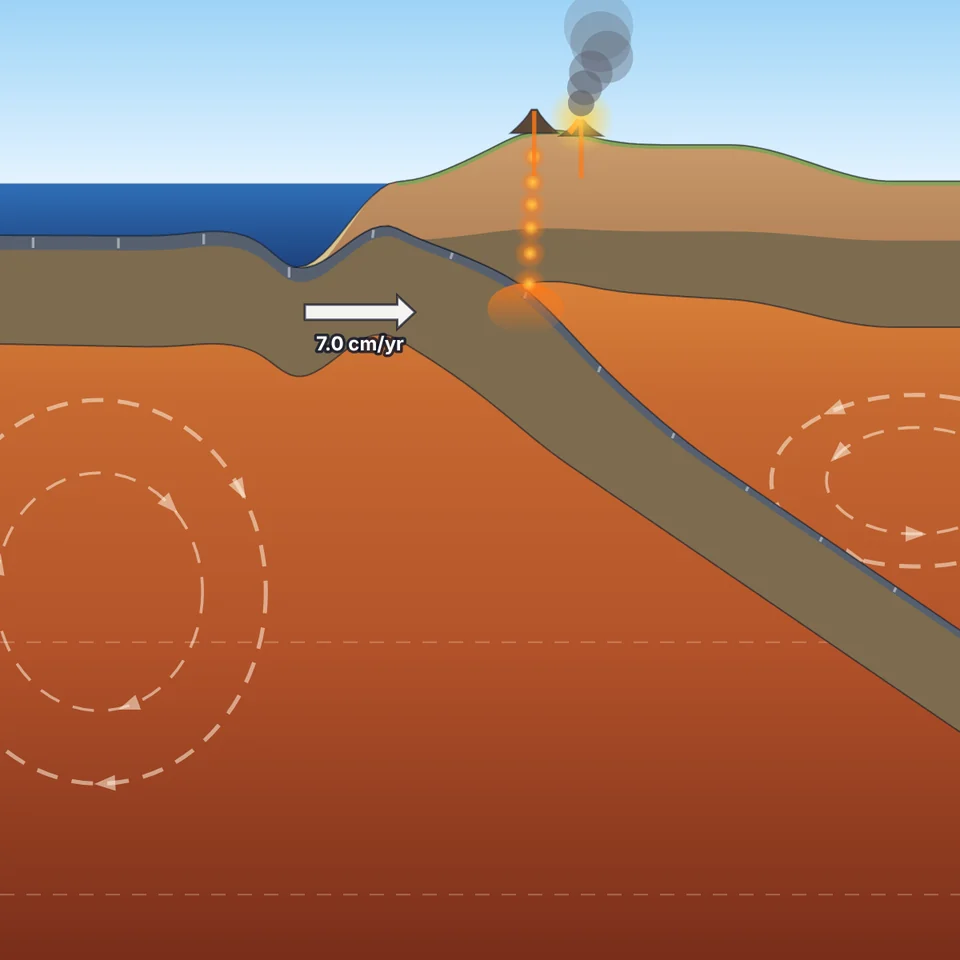
Plate tectonics and plate boundaries
See plate tectonics at work: a mid-ocean ridge with its magnetic stripes, subduction under the Andes and Japan with trenches, earthquakes and volcanoes, the collision that built the Himalaya, the San Andreas Fault's stick-slip earthquakes and the continents drifting from Pangaea to today, at real speeds in centimetres a year.
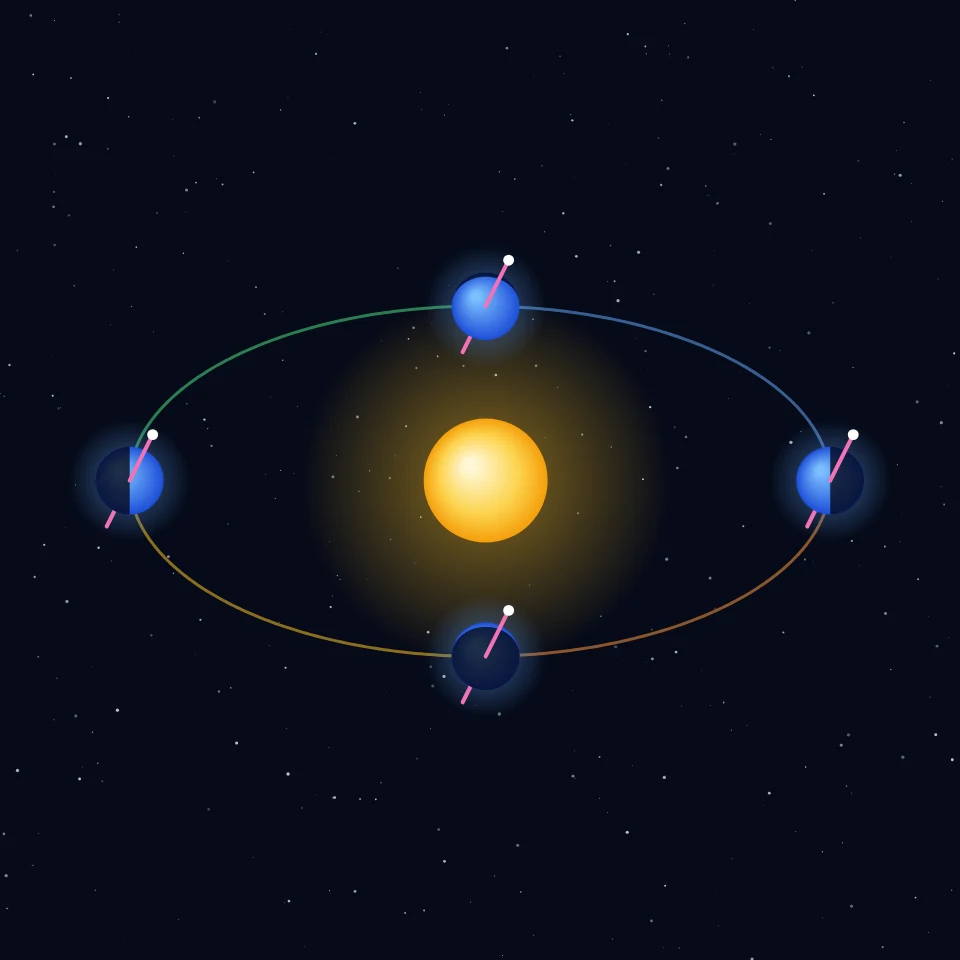
Seasons and Earth's tilt
Why does the Earth have seasons? Watch the Earth go round the Sun with its 23.44° tilt, see the day length, the noon Sun's height and the sunlight at any latitude through the year, the solstices and equinoxes, polar day and night, and what would happen with no tilt or a tilt like Uranus.
Ready to try it?
Open PictorX in your browser — no install, no credit card required to start.
Go to Editor