
Rules
Flock
Look
Flock Vortex
600 birds start as a random scatter. Nobody leads, and no bird knows where the flock is. Each one only watches its 7 nearest neighbours, and flies home when it strays more than 200 px from the roost. Watch them spin themselves into one ring. Then switch to Flock vs Hawk: the same three rules, a hawk on the hunt, and one bird you pick to follow. Tap a bird to follow it. Pick The Vortex or Flock vs Hawk, change the three rules while the flock flies, then save a PNG or open it in the editor with the sky, the flock, the hawk and your bird on layers of their own.
How it works
- Watch The Vortex: 600 scattered birds, no leader and no map, settle into one ring round the roost. Ring in the corner shows how much of the flock circles the same way.
- Switch to Flock vs Hawk, wait for the hawk and tap a bird to follow it. The corner counts how long it has been alive, or when it was caught.
- Change Separation, Alignment, Cohesion and the neighbours each bird watches while the flock flies, then save a PNG or a video, or open the picture in the editor with the sky, the flock, the hawk and your bird on layers of their own.
Three rules and seven neighbours
Every bird follows three rules, and only about its 7 nearest flockmates: keep a little room (separation), fly the way they fly (alignment) and stay with them (cohesion). These are the rules of Craig Reynolds' boids from 1986. Counting neighbours instead of looking within a fixed distance comes from the StarFlag study of real starling flocks in Rome, which found that each starling keeps track of six or seven others, however far apart they are. That is why the flock holds together when it stretches and thins out.
Why the scatter becomes a ring
Nothing in The Vortex pulls a bird to the middle. A bird inside the roost's circle flies straight on; only a bird more than 200 px out turns for home. Turning back at the edge, it swings its neighbours round with it, and they swing theirs, until every bird circles the same way. Physicists call this a mill. Fish schools, ant columns and bats over a cave form the same rotating ring, and no animal in it knows that it is part of a circle.
Flock vs Hawk
In the second scene the flock flies through a world without edges and a hawk hunts it. The hawk is faster than any bird but slower to turn, and it goes for a bird that is near and on its own. A bird that sees it close flees, a little faster and turning sharper, and its neighbours follow it, so a wave of escape runs through the flock. Birds deep inside a dense flock are hard to pick out; stragglers are not. Pick a bird and watch whether staying with the crowd keeps it alive.
Frequently asked questions
Does any bird lead the flock?
No. Every bird follows the same three rules about its 7 nearest neighbours, and no bird sees the whole flock or knows where it is. The ring, the waves and the escapes all come from those local rules. Scientists call this emergence or self-organisation.
Why 7 neighbours?
Because real starlings seem to do it that way. The StarFlag project filmed flocks over Rome in 3D in 2008 and found that each bird reacts to about six or seven others, wherever they are, not to every bird within a fixed distance. Set Neighbours watched to 20 and The Vortex stops forming a ring: every bird follows so many others that the flock flies as one block.
Why do starlings form murmurations?
Scientists think mostly for safety and for the night roost: in a dense, swirling flock a falcon struggles to single out one bird, and the display may draw more starlings to roost together and keep warm. In Flock vs Hawk a bird that sees the hawk flees and its neighbours follow, so a wave of escape runs through the flock.
What does Ring measure?
How much the flock circles its middle the same way: 0% when the birds fly every which way, 100% when every bird circles in the same direction. A scattered flock usually reaches 90% within a few seconds to half a minute, depending on how the birds started.
How does the hawk choose a bird?
It goes for a bird that is close and on its own, ahead of it rather than behind. It flies faster than the birds but turns more slowly, so a bird that turns away at the last moment can escape. After a catch the hawk rests for a few seconds before it hunts again.
Flock Vortex: how do I record a video?
Press the red Record button in the playback bar: it films what the stage shows. Press it again to stop, and the video is saved to your device. Recording is free; you only need to sign in. Without a subscription the video carries a small PictorX logo in a corner. The button beside Record opens the video options: the shape (as shown, square, story 9:16 or wide 16:9), the length (until you stop, or 5, 10, 15 or 30 seconds for social media) and the file: MP4, WebM or an animated GIF. You can add one of three music tracks: calm, bright or beat.
Related tools
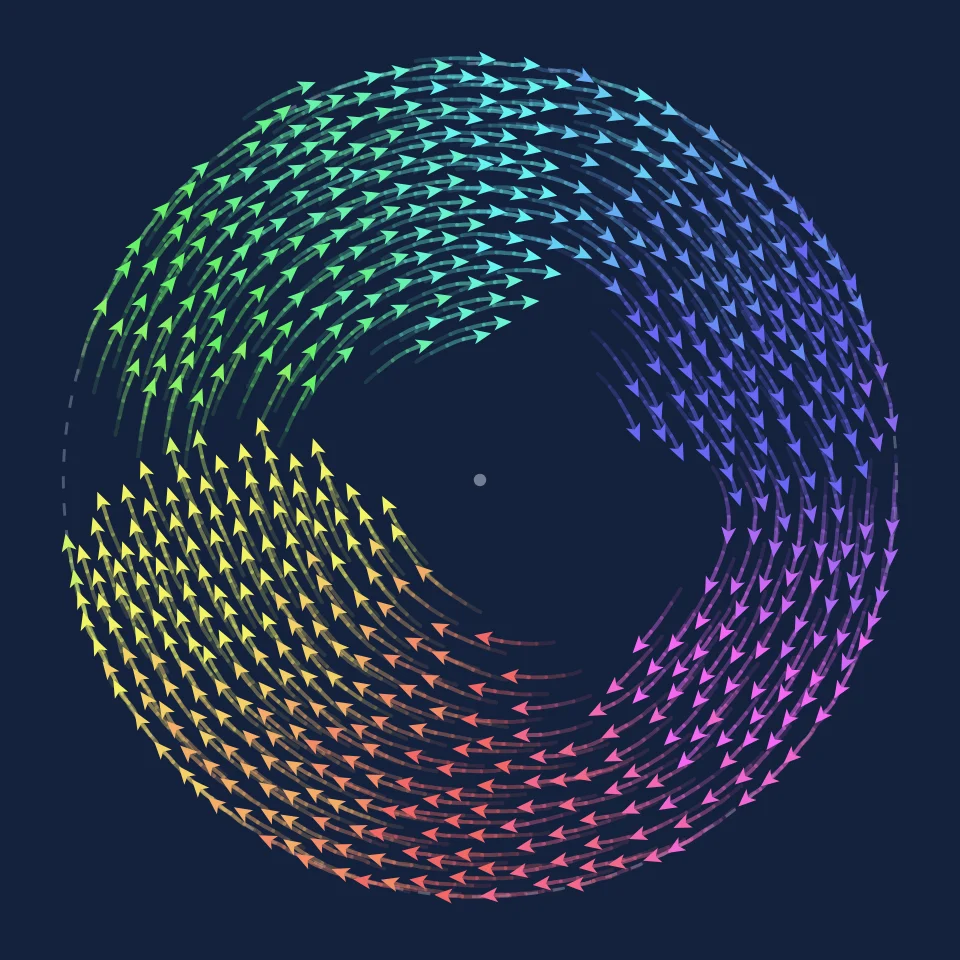
Flocking and the Flock Vortex
How birds that each follow three rules and watch only their 7 nearest neighbours form a flock, why a scatter spins itself into a ring round a roost, and how a flock escapes a hawk.
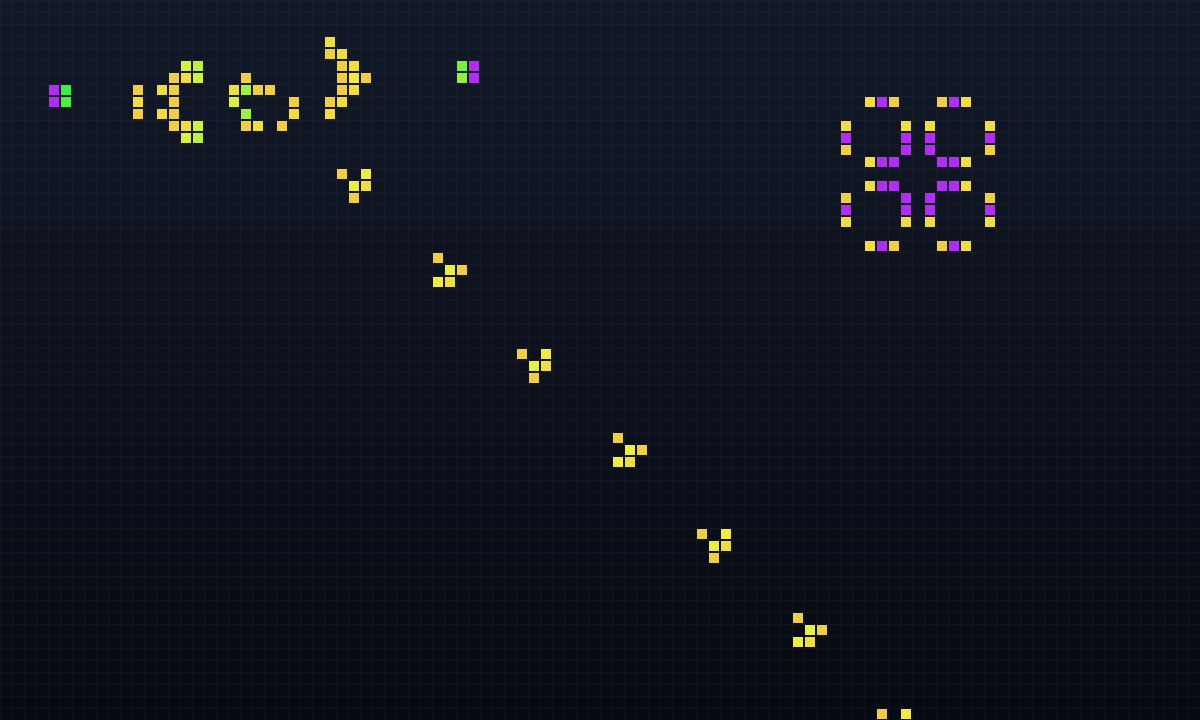
Conway's Game of Life
Play Conway's Game of Life in your browser. Watch a glider gun, spaceships, and the R-pentomino, draw your own cells, and try Life-like rules such as HighLife.

Langton's Ant
Run Langton's Ant in your browser. Watch symmetry, chaos and the 104-step highway, then try multi-colour rules, several ants, a hex grid and turmites.
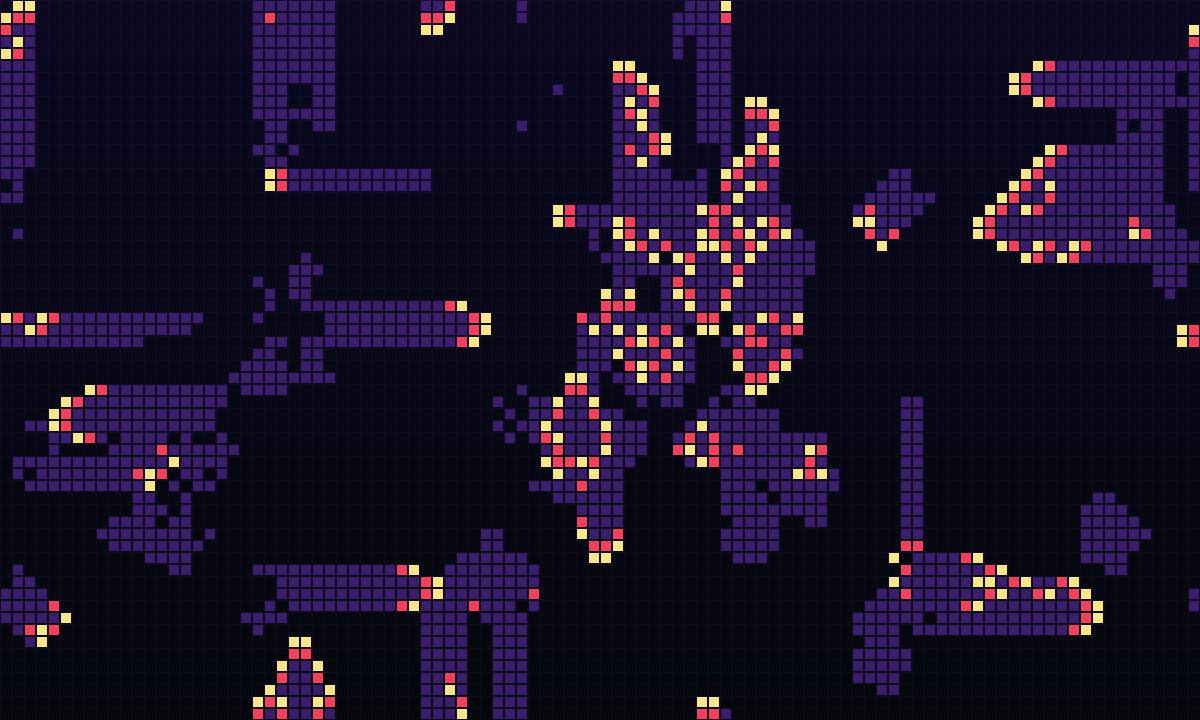
Brian's Brain
Run Brian's Brain in your browser: cells fire, rest, and turn off, and restless waves and gliders cross the grid. Draw cells, pick a start, and save a PNG.
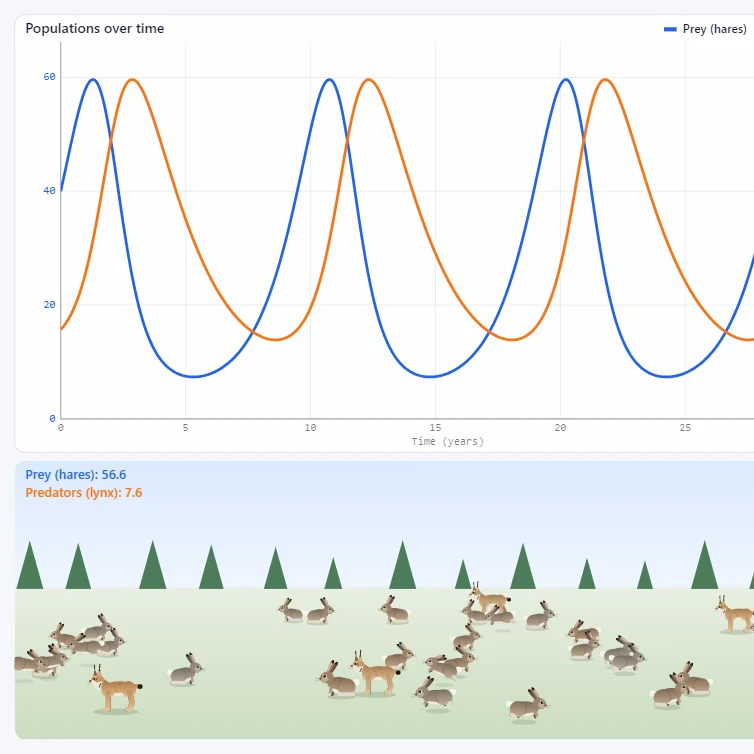
Predator–Prey
Watch hares and lynx rise and fall in the Lotka-Volterra model. Set the rates, see the predator peaks lag behind the prey peaks and follow the closed orbit in the phase plane.
Flow Field
Steer thousands of particles with curl noise, wind, gravity, and clickable attractors, repellers, and vortices. Animate and save a PNG.
Ink & Smoke Fluid
Simulate ink dropping into water, rising smoke, incense and colliding jets in your browser, and stir the fluid with your mouse or finger. Save a PNG or open it in the editor in layers.
Ready to try it?
Open PictorX in your browser — no install, no credit card required to start.
Go to Editor