
Brian's Brain
Brian's Brain is a cellular automaton with three states: off, firing, and refractory. An off cell fires when exactly two of its eight neighbors are firing. A firing cell always turns refractory, and a refractory cell turns off. Because a cell must rest after it fires, pulses can only move forward, and the grid fills with waves and gliders that never settle. Pick a start and watch the waves run. Click or drag on the grid to draw firing cells, or choose Erase. An off cell fires when exactly two neighbors fire, then rests for one generation.
How it works
- Open this page. A patch of firing cells breaks into waves that race across the grid.
- Pick another start: gliders on a collision course, or random cells over the whole grid.
- Draw or erase firing cells, change the speed, colors, and cell size, then save a PNG or open the layers in the PictorX editor.
Fire, rest, turn off
Every cell is off, firing, or refractory. An off cell fires when exactly 2 of its 8 neighbors are firing. A firing cell becomes refractory in the next generation, and a refractory cell becomes off. Only firing cells count as neighbors. The refractory step works like a nerve cell resting after a signal: it cannot fire again at once, so a wave cannot turn back on itself.
Gliders everywhere
The simplest pattern that moves is two firing cells side by side with two refractory cells behind them. Each generation the pair fires the two cells in front and leaves rest behind, so it travels one cell per generation, the fastest any pattern can go. Most starts break up into many such gliders, and their collisions start new waves. Unlike the Game of Life, Brian's Brain almost never dies down: there are no still lifes, because a firing cell cannot stay firing.
Who was Brian?
Brian Silverman designed the rule, and it became known through the CAM-6 cellular automata machine of Tommaso Toffoli and Norman Margolus in the 1980s. It belongs to a family called Generations, rules in which a cell that stops being alive passes through dying states before it is dead. Its cousin Wireworld uses four states to build wires and logic gates. Both run on the Cellular Automata page too.
Frequently asked questions
What are the rules of Brian's Brain?
An off cell fires when exactly 2 of its 8 neighbors are firing. A firing cell becomes refractory, and a refractory cell becomes off. Only firing cells count as neighbors.
Why does Brian's Brain never settle down?
A firing cell must rest for a generation before it can fire again, so nothing can stay still. Patterns break into gliders and waves that keep moving, and their collisions start new ones.
How fast does a Brian's Brain glider move?
One cell per generation, the speed of light of a cellular automaton. It is two firing cells side by side with two refractory cells behind them.
How is Brian's Brain different from the Game of Life?
It has a third state, refractory, and a cell fires with exactly two firing neighbors instead of being born with three. It has no still lifes and almost never dies out.
Why is it called Brian's Brain?
It is named after Brian Silverman, who devised it, and it behaves a little like nerve tissue: a cell fires, then must rest for one generation, the refractory state, before it can fire again, much as a neuron does. Silverman also devised Wireworld and the Seeds rule.
Brian's Brain: how do I record a video?
Press the red Record button in the playback bar: it films what the stage shows. Press it again to stop, and the video is saved to your device. Recording is free; you only need to sign in. Without a subscription the video carries a small PictorX logo in a corner. The button beside Record opens the video options: the shape (as shown, square, story 9:16 or wide 16:9), the length (until you stop, or 5, 10, 15 or 30 seconds for social media) and the file: MP4, WebM or an animated GIF. You can add one of three music tracks: calm, bright or beat.
Related tools
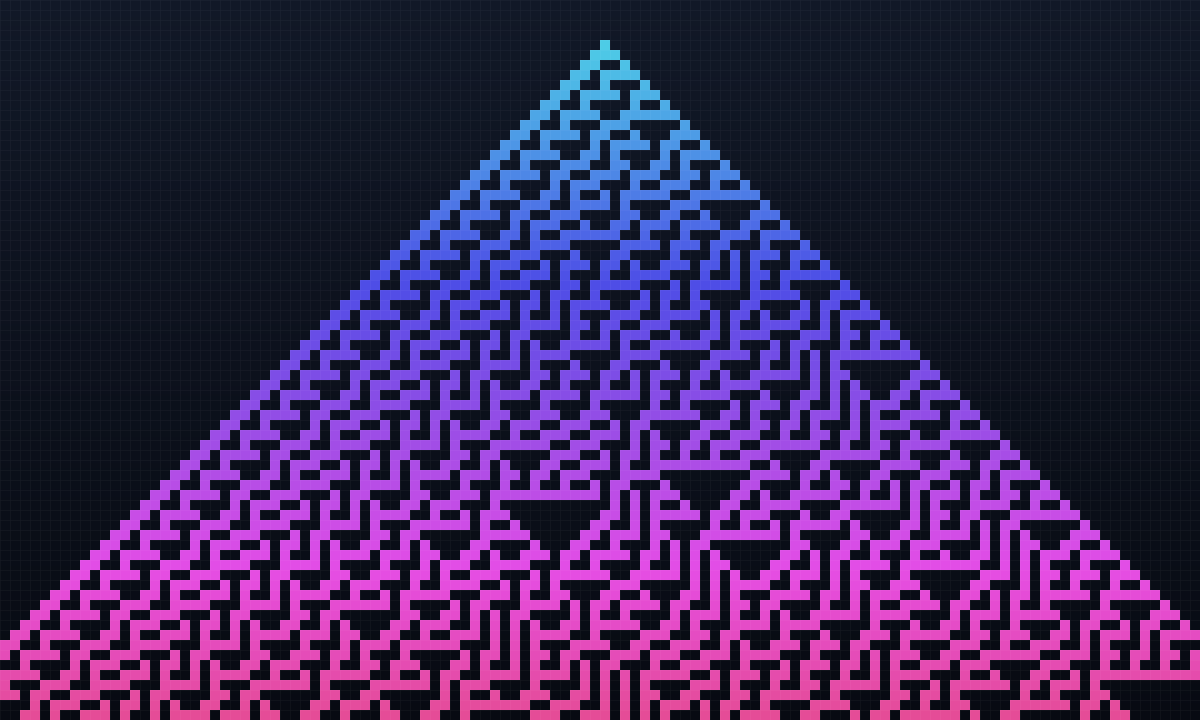
Cellular Automata
Run Conway's Game of Life, Rule 30, Rule 110, Brian's Brain, and Wireworld in your browser. Draw cells, change the rule, and watch simple rules grow complex patterns.
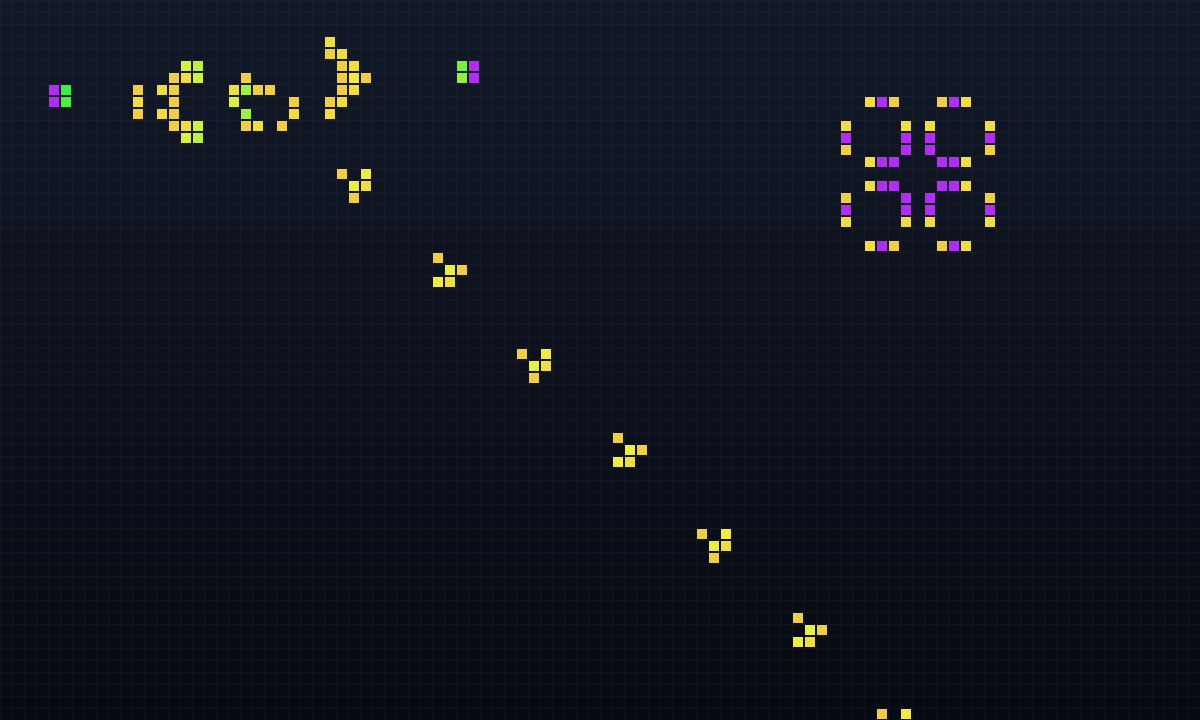
Conway's Game of Life
Play Conway's Game of Life in your browser. Watch a glider gun, spaceships, and the R-pentomino, draw your own cells, and try Life-like rules such as HighLife.
Cellular Automata
What is a cellular automaton? The four basic parts, Conway's Game of Life, Rule 30, Rule 110, Brian's Brain, Wireworld, and Wolfram's 256 rules and 4 classes.

Langton's Ant
Run Langton's Ant in your browser. Watch symmetry, chaos and the 104-step highway, then try multi-colour rules, several ants, a hex grid and turmites.
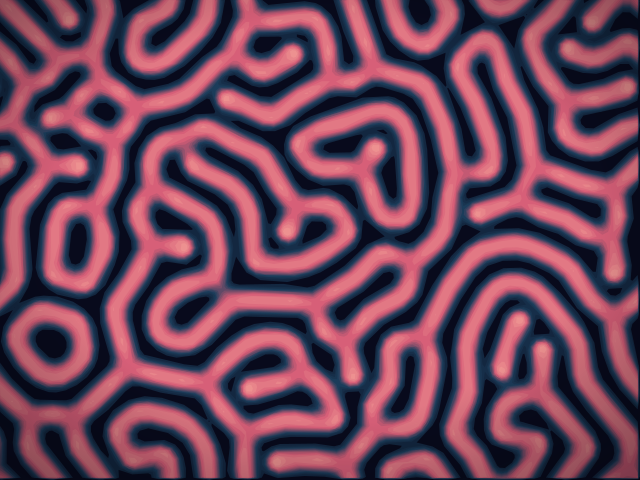
Reaction-diffusion simulator
Grow spots, stripes, mazes and coral with a Gray-Scott reaction-diffusion simulator. Paint chemicals, set feed and kill rates, or seed it from a photo.
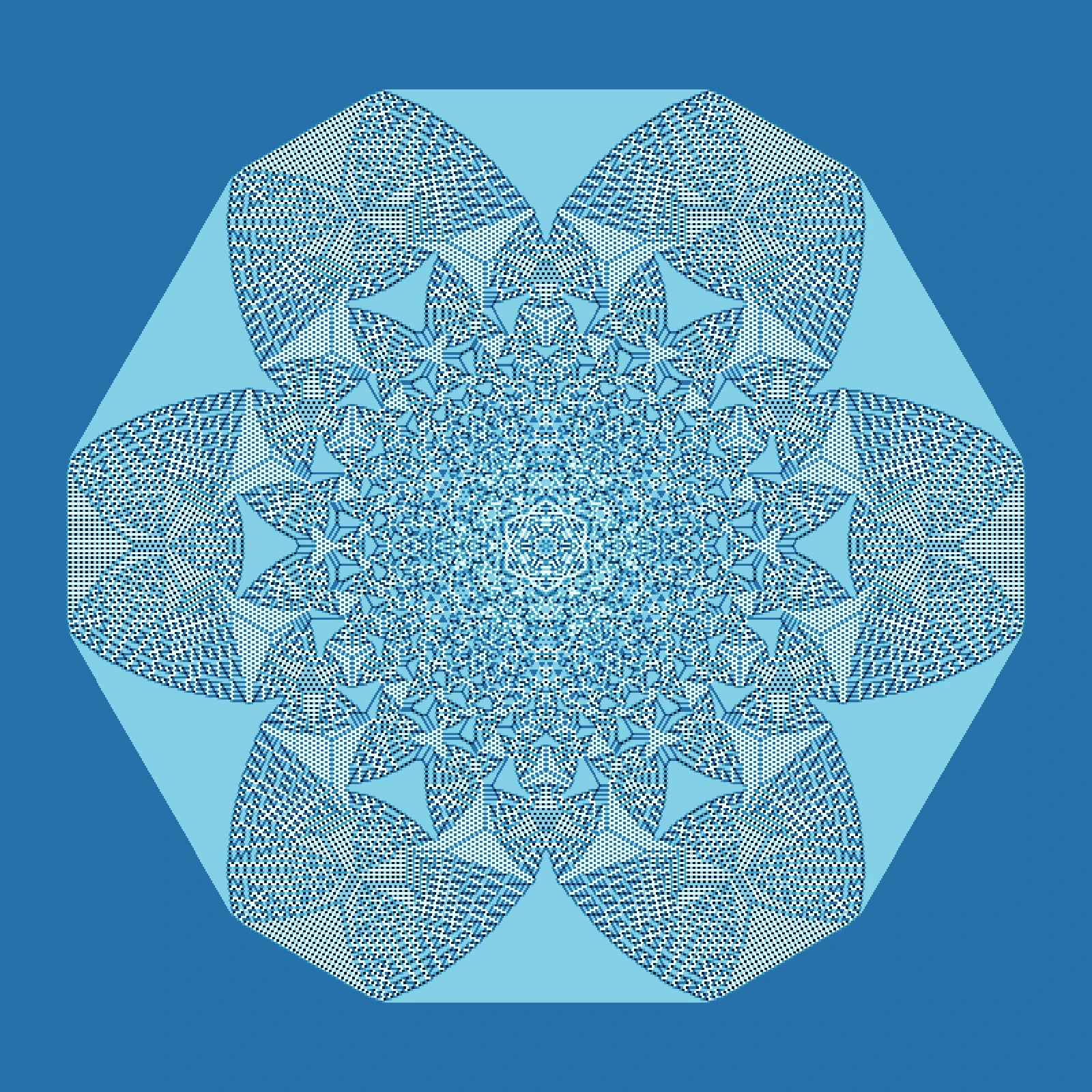
Sandpile Fractal
Drop up to a million grains of sand on one cell and watch them topple into a fractal. Square, diagonal and triangular lattices, the identity of the sandpile group, and avalanches.
Ready to try it?
Open PictorX in your browser — no install, no credit card required to start.
Go to Editor