
About Minesweeper - history, rules and strategy
Minesweeper became famous as one of the small games that came with Windows, but the idea is older. It is a pure logic puzzle with a pinch of luck: most of the time the numbers tell you exactly where the mines are.
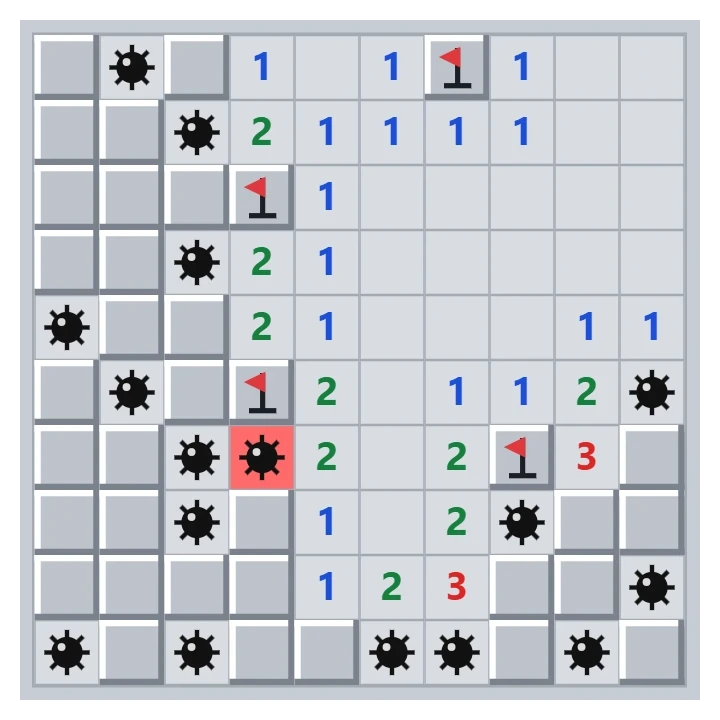
Where it comes from
Games about finding hidden mines on a grid appeared on mainframes and home computers in the 1970s and 1980s. Minesweeper came with Windows from 1990 onwards, and its grey cells, red flags and smiling face became known all over the world.
Reading the numbers
A number shows how many of the eight cells around it hide a mine. When a 1 touches only one closed cell, that cell is a mine. When a number already has all its mines flagged, its other neighbours are safe. These two rules solve most of a game.
Patterns and guessing
Some patterns appear again and again. Along a wall, 1-2-1 means the mines are under the two 1s, and 1-2-2-1 means they are under the two 2s. Sometimes no logic helps and you must guess; then pick the cell with the best odds, often a corner or a cell far from the numbers.
Frequently asked questions
Can every game be solved without guessing?
Not always. In a random field there can be places where two cells are equally likely to hold the mine, so a guess is needed.
What is chording?
Clicking an open number whose mines are all flagged opens all its other neighbours at once. It saves a lot of clicks and time.
What is a good time on Expert?
Many players finish Expert in a few minutes. Top players clear it in well under a minute.
Related tools
Minesweeper
Play classic Minesweeper free in your browser. Beginner, Intermediate, Expert or a custom field, a safe first click, flags, chording and best times.
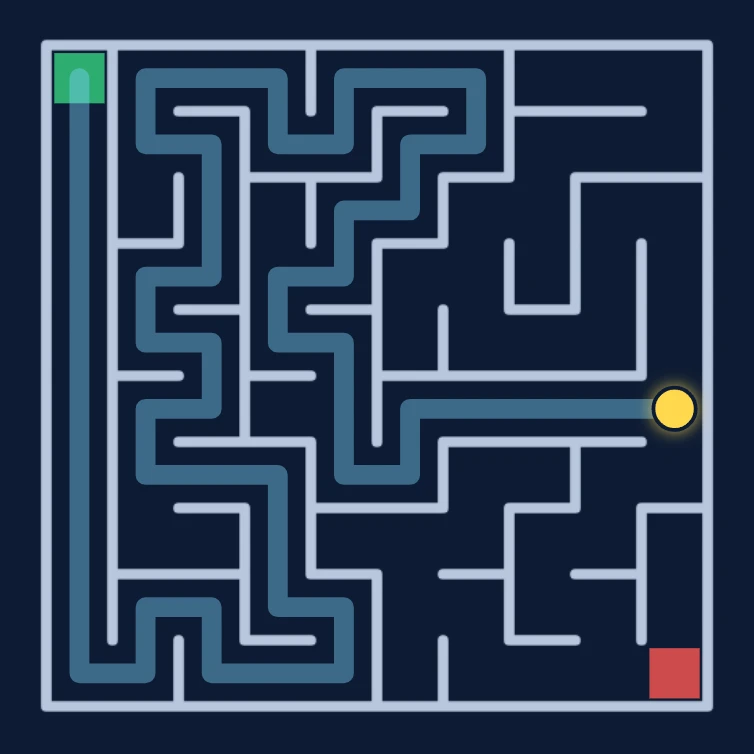
Maze
Play a free maze game in your browser. Find the way from the green start to the red exit in mazes from 5 x 5 to 100 x 100, against the clock or in the fog.
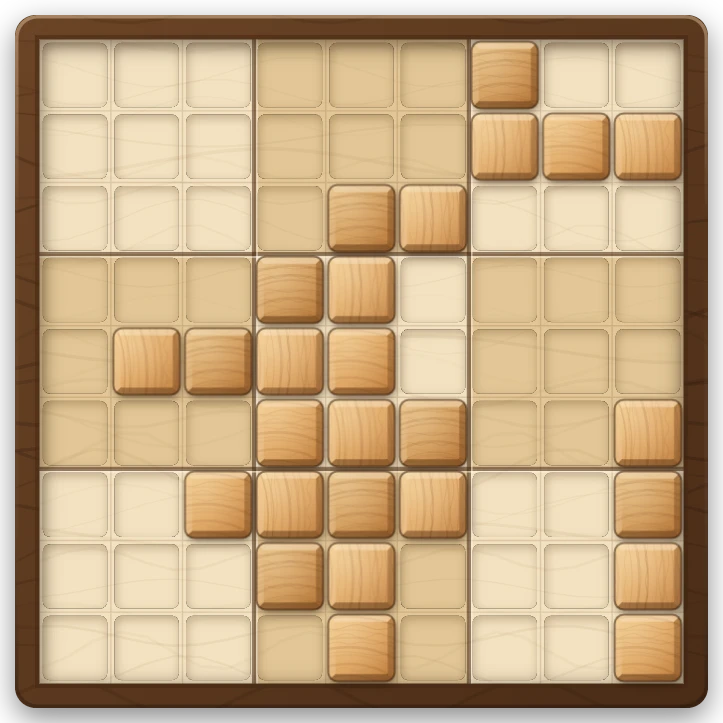
Wood Block Sudoku Puzzle
Play Wood Block Sudoku free in your browser. Drag wooden pieces onto a 9x9 board and clear rows, columns and 3x3 boxes. Combos, streaks, a holder slot and no time limit.
About mazes - from ancient labyrinths to generated puzzles
How mazes work: labyrinths and mazes in history, what a perfect maze is, how the recursive backtracker and Prim's algorithm grow one, and tips for solving them.
Ready to try it?
Open PictorX in your browser — no install, no credit card required to start.
Play Minesweeper