
About President - rules, ranks and strategy
President is a card game for three or more players in which everyone tries to get rid of their cards first by beating the last play with higher cards. The order in which players go out gives them a title for the next hand, and the titles come with a card exchange that favours the winners. This page explains the rules, the exchange, the many names and variants of the game and how to play it well.
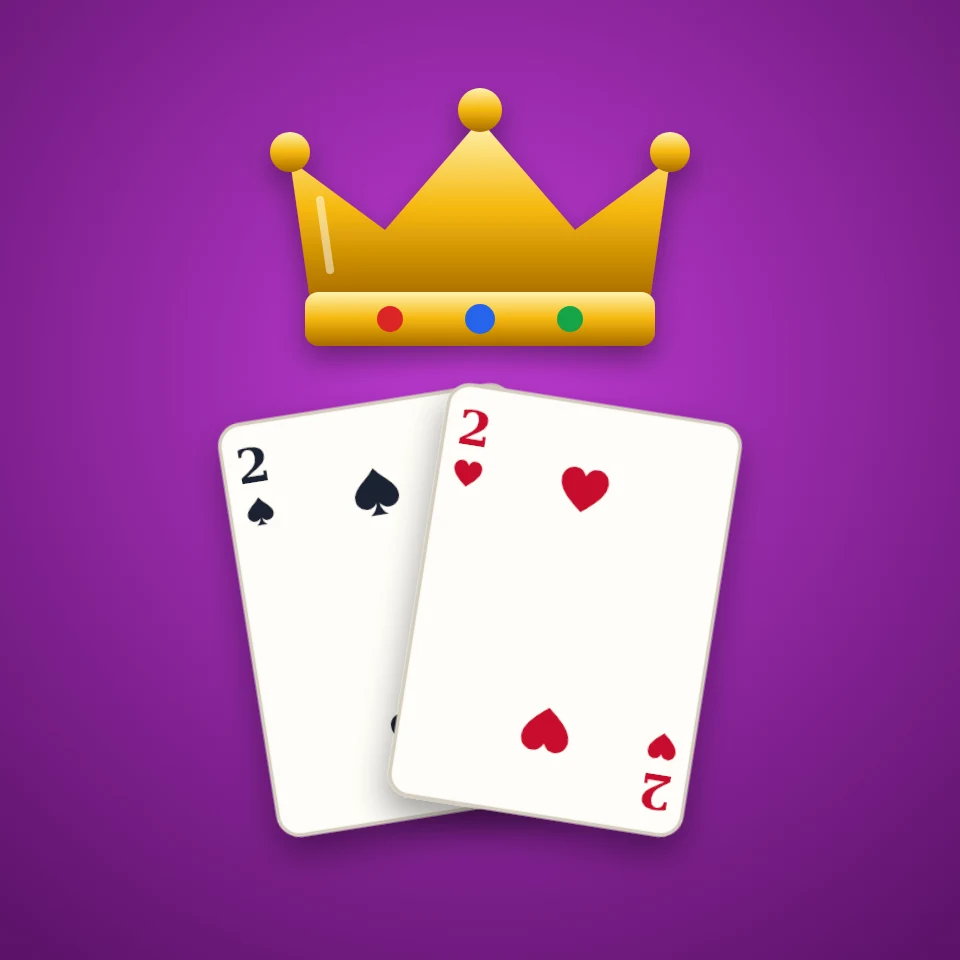
A climbing game
President belongs to the climbing games: each play has to beat the one before it, so the cards on the pile climb in rank until nobody can or wants to go higher, and the last player to play starts afresh. Like the shedding games, the aim is to get rid of your cards first. The family is often traced back to China, where Zheng Shangyou (争上游, roughly "race to be upstream") is a long-established game of this kind.
Its names: Daifugō, Asshole and others
The game is played under many names. In Japan it is Daifugō (大富豪, "grand millionaire") or Daihinmin (大貧民, "grand pauper"), named after the best and worst places. In English-speaking countries it is often known by blunt names such as Asshole or Scum, after the title of the player who finishes last; President is the polite name and also the usual one in France. The Great Dalmuti, published by Richard Garfield in 1995, is a commercial version with its own deck of cards ranked 1 to 12, where there is one card of rank 1, two of rank 2 and so on, plus two jesters.
Relatives: Tiến lên and Big Two
Two close relatives are played mainly in Asia. Tiến lên ("go forward") is a national card game of Vietnam, and Big Two (Cantonese Chor Dai Di, 鋤大D) is popular in southern China, Hong Kong and Taiwan. Both rank the cards from 3 up to 2 as President does, but the suits matter too, so a higher suit beats a lower one of the same rank, and they allow sequences: in Tiến lên runs of consecutive ranks, in Big Two five-card combinations like those of poker. Neither has the titles or the card exchange of President.
How a hand is played
A standard 52-card deck is dealt out completely, so with four players each gets 13 cards. The ranks go from 3, the lowest, through 10, jack, queen, king and ace to 2, the highest; suits do not count. In the first hand the player holding the three of clubs leads. The leader plays one card, or two, three or four cards of the same rank. Going round the table, each player must play the same number of cards of a higher rank, or pass. When everyone else has passed, the pile is cleared and the last player to play leads any new single or set. If that player has just gone out, the next player still in leads. The hand goes on until only one player has cards left.
Titles and the card exchange
The first player to go out becomes President, the second Vice-President, the last the Beggar (the Scum or Asshole in some places) and the one before the Vice-Beggar; anyone in between is a Citizen. Before the next hand is played, the Beggar must give their two best cards to the President, who gives back any two cards they like, and the Vice-Beggar and Vice-President swap one card the same way. The Beggar leads the new hand. Because the President gets the best cards, a player at the top tends to stay there, which is part of the game's appeal. On PictorX each hand scores one point for every player who went out after you, and the most points after 5 or 10 hands wins.
Common variants
Almost every group plays President a little differently, so agree on the rules before you start. In many games a pass keeps you out until the pile is cleared; in others you may play again when your turn comes round. Some tables let a 2, or four of a kind, clear the pile at once so its player leads again. Others skip the next player when someone matches the rank just played, or forbid going out with a 2. Jokers are often added as wild cards or as the highest cards. Japanese Daifugō has well-known extras: four of a kind starts a revolution that turns the ranking upside down until the next one, and in the eight-stop rule an eight clears the pile.
Strategy
Get rid of your low cards early, when you lead or when a low play lets you follow cheaply, because a 3 or a 4 can only be played on an empty pile or a lower card. Keep pairs and triples together: a set is hard to beat and can get rid of several cards at once. Save your aces and 2s to win back the lead when you need it, and remember which high cards have been played, so you know when a play of yours cannot be beaten. Passing is often right: breaking up a pair or spending a 2 just to stay in a round can leave you stuck later. Plan your last plays so that you finish with a card or set the others cannot beat, or one you can lead after winning the pile.
Frequently asked questions
Which card is the highest in President?
The 2. The ranks go from 3, the lowest, up to king, ace and 2. Suits do not matter, so any 2 beats any ace, and a single 2 cannot be beaten by another single card.
Can I play two cards on a single card?
No. You must play exactly as many cards as the play on top: a single on a single, a pair on a pair, a triple on a triple. Only when the pile is empty can you choose how many cards to lead.
Who leads the first hand?
The player holding the three of clubs. In later hands the Beggar, who finished last, leads after the card exchange.
Does the President have to give back good cards?
No. The Beggar must hand over their two best cards, but the President may give back any two cards, and naturally gives low ones that are no use to them.
What happens if the player who wins the pile has no cards left?
The pile is cleared as usual, and the next player who still has cards leads.
How is President different from Big Two?
Big Two uses the same order of ranks with the 2 on top, but suits also count, five-card poker hands can be played, and the losers usually score penalty points for the cards left in their hands. It has no titles and no card exchange.
Related tools
President
Play President free in your browser against two, three or four computer players. Beat the pile with higher singles, pairs or triples, pass when you cannot, and go out first to become President. Card exchange, standings over 5 or 10 hands.
About Crazy Eights - rules, variants and strategy
How Crazy Eights is played, how the eights and the stock work, how a round is scored, which variants are common, how it relates to Mau-Mau, Switch and Uno, and how to play it well.
Crazy Eights
Play Crazy Eights free in your browser against one, two or three computer players. Match the suit or rank, play an eight to call a new suit, and be first to empty your hand. Easy or Smart opponents, scored to 100 points.
About Hearts - history, rules and strategy
Where the card game Hearts comes from, from Reversis to Black Lady and the Hearts that came with Windows, how passing and scoring work, what shooting the moon is and how to play well.
Hearts
Play Hearts free in your browser against three computer players. Pass three cards, follow suit, dodge the hearts and the queen of spades, or take them all and shoot the moon.
Ready to try it?
Open PictorX in your browser — no install, no credit card required to start.
Play President