
About jigsaw puzzles - history, cutting and strategy
Jigsaw puzzles began as teaching aids and became one of the most loved pastimes in the world. Here is a little history, how the pieces are shaped and some tips for finishing big puzzles.
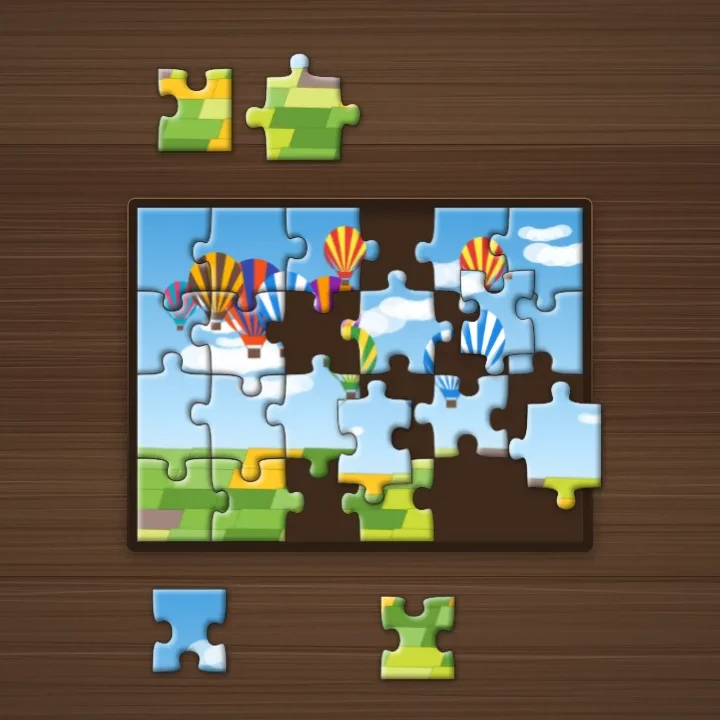
From maps to living rooms
Around 1760 the London mapmaker John Spilsbury mounted a map on wood and cut it along the borders to teach geography. Puzzles for adults followed in the early twentieth century, and cardboard die-cut puzzles made them cheap enough for every home during the 1930s.
The classic piece
A standard piece has four sides, each straight, with a tab or with a blank. Here every inside edge is a smooth curve with a little random variation, so a piece only fits its true neighbour, just as with a die-cut puzzle.
Strategies that work
Start with the edges, then sort the rest by colour and texture. Build small islands of sky, water or flowers and join them to the frame, and look at the shape of the tabs when the colours are too alike.
Frequently asked questions
Why is it called a jigsaw?
Early wooden puzzles were cut with fine fretsaws and later with treadle jigsaws, and the name stuck even after cardboard took over.
Are jigsaws good for the brain?
They exercise visual memory, attention and patience, and many people find them a calm way to switch off.
How long does a 300-piece puzzle take?
Often one to three hours for a first try. Your best time for each size is saved, so you can see yourself improve.
Related tools
Jigsaw Puzzle
Play jigsaw puzzles free online: built-in pictures or your own photo, 12 to 300 curved pieces, snapping, an edge filter and a preview. No sign-up.
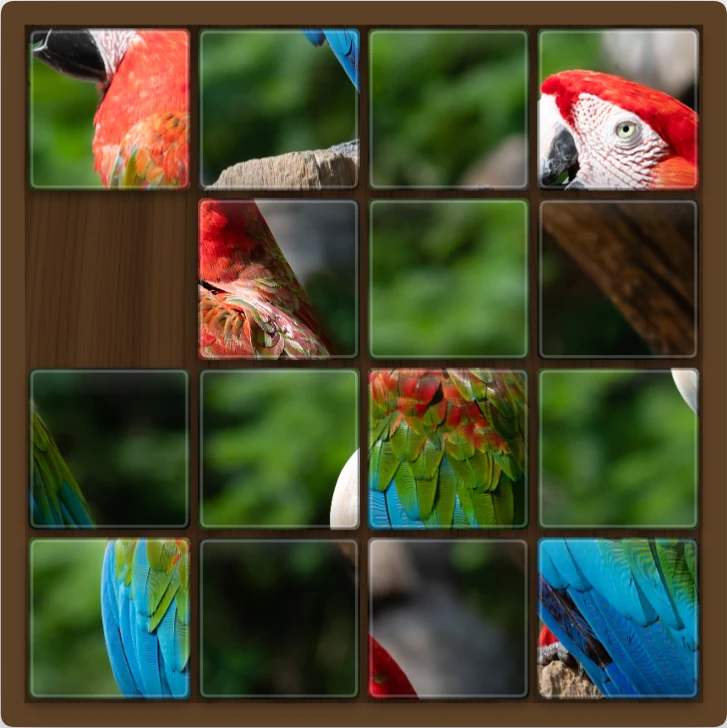
Sliding Photo Puzzle
Turn any photo into a sliding tile puzzle in your browser. Open your own picture or pick an example, choose 3×3, 4×4, 5×5, or 6×6 tiles, and slide them until the photo is whole again, or watch Solve do it.
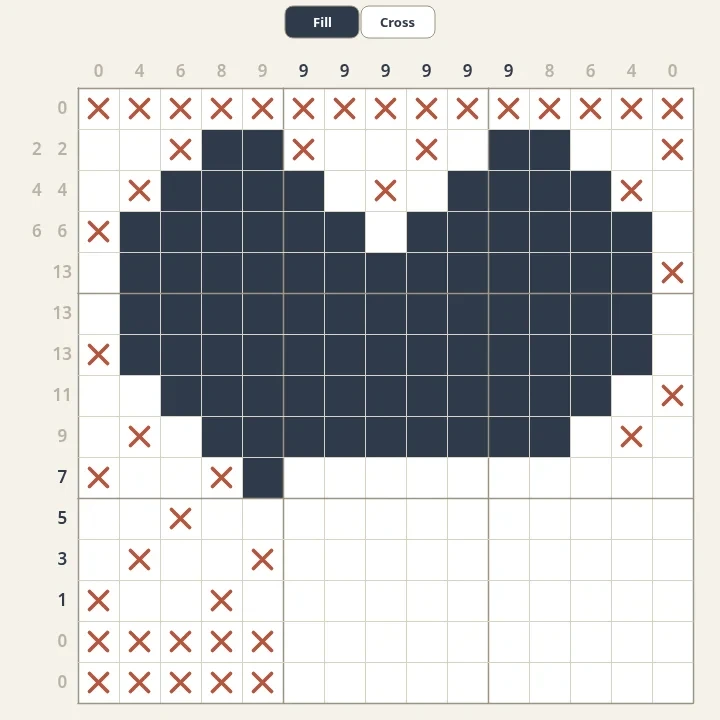
Nonograms
Solve free nonograms in your browser. Every puzzle is generated, has one logical solution and reveals a pixel picture. Choose sizes from 5x5 to 20x20 and mark empty cells with crosses.
Ready to try it?
Open PictorX in your browser — no install, no credit card required to start.
Play a jigsaw