
Ecosystem food web simulator
In every ecosystem the energy that plants capture from sunlight passes from eater to eater: grass to rabbit, rabbit to fox. Most species eat several foods and are eaten by several enemies, so these food chains knit together into a food web. Here six real food webs come alive: the arrows show who eats whom and how much food flows along each link, and the populations rise and fall year by year as plants, prey, predators and decomposers respond to each other. Take out the top predators, the main herbivore or the decomposers and watch the effects cascade through the web. A living food web. Press Play to watch the populations change year by year, Next year and Previous year to step, Reset to start again. Each arrow points from the food to the eater and is as wide as the food that flows along it; the discs grow and shrink with the populations, and the chart follows every species over time. Click a species to remove it and watch the effects ripple through the web, click it again to bring it back; drag a species to move it, and hover over it to see what it eats (green) and what eats it (red). Pick an ecosystem and an event, such as the top predators removed in year 20 or a drought, and turn the plant growth and the predation up or down. Switch Sound on to hear the events; Record films it with the sound.
How it works
- Pick an ecosystem: an oak forest, the African savanna, the open ocean, a pond, the Arctic tundra or a kelp forest. The producers sit at the bottom, then the herbivores and the carnivores that eat them, each at the trophic level its diet gives it; the decomposers and the dead matter lie underneath.
- Press Play and watch the populations settle from a random start: predators and prey rise and fall in turn, as in the Lotka–Volterra equations. The discs grow and shrink with the populations, the arrows widen with the food that flows along them, and the chart follows every species.
- Choose an event, such as the top predators or the main herbivore removed, the decomposers gone or a drought, and the year it happens, or simply click a species to remove it there and then. Click it again to bring it back.
- Turn the plant growth and the predation up or down, drag the species around, hover over one to see what it eats and what eats it, and read the species left, the food links and the top trophic level in the tiles. Save the picture or open it in the editor with every level on a layer of its own.
Food chains and food webs
A food chain follows energy from one organism to the next: kelp is eaten by sea urchins, and sea urchins by sea otters. Real animals rarely eat just one thing, so the chains of an ecosystem branch and cross into a food web. Its arrows point from the food to the eater, the way energy and matter flow. Ecologists describe a web by its number of species, its number of links and its connectance, the share of all possible links that really exist; real webs have a connectance of about 0.05 to 0.3.
Trophic levels and the ten percent rule
Plants and algae are the producers, level 1: they capture the energy of sunlight. Herbivores are primary consumers (level 2), the carnivores that eat them secondary consumers (level 3), and so on. An omnivore sits in between: its trophic level is one more than the average level of its food, weighted by how much of each it eats. At each step only about a tenth of the energy is passed on; the rest is used for living and lost as heat. That is why food chains rarely have more than four or five links, and why there are far fewer wolves than deer.
Trophic cascades and keystone species
When sea otters were hunted almost to extinction along the Pacific coast, sea urchins multiplied and grazed the kelp forests down to bare rock; where the otters came back, so did the kelp. Wolves returned to Yellowstone in 1995 changed where and how much the elk graze, and willows and aspens recovered along some rivers. Effects that run down a web from the top like this are trophic cascades, and a species whose effect is far greater than its numbers, like the sea otter, is a keystone species. Removing the top predators here shows the same pattern: the herbivores boom and the plants they eat decline.
Decomposers and the cycle of matter
Energy flows through an ecosystem once, but matter goes round and round. Dead plants and animals, droppings and fallen leaves are broken down by bacteria, fungi, termites and worms, which release the nutrients the plants need to grow again. In the model the decomposers feed on the dead matter and return its nutrients; take them away and the nutrients stay locked up in dead matter, the plants go hungry, and the whole web shrinks with them.
Frequently asked questions
What is the difference between a food chain and a food web?
A food chain is a single path of energy, such as grass → rabbit → fox. A food web shows all the feeding links of an ecosystem at once: many chains that branch and cross, because most species eat several foods and are eaten by several predators. Webs explain why an ecosystem can cope with the loss of one species but not of another: a predator with other prey switches to them, while one that depends on a single food starves.
What happens if you remove a top predator?
Its prey are freed from predation and multiply, often far beyond their former numbers, and then eat more of their own food. In the forest the deer boom and the shrubs and grasses decline; in the kelp forest the sea urchins multiply and graze the kelp down. This chain of effects running down the web is a trophic cascade. Other predators of the same prey may gain, while species further away can lose out.
What are the Lotka–Volterra equations?
Two equations proposed in the 1920s by Alfred Lotka and Vito Volterra for a predator and its prey: the prey grows and is eaten in proportion to how often predators and prey meet, and the predators grow on what they eat and die at a steady rate. Their populations go round in cycles, the predators lagging behind the prey. The simulator uses a generalised version for a whole web: every eater can have many foods, gets full when food is plentiful (a Holling type II response) and gets in its rivals' way, and the plants are limited by space and nutrients. The cycles then dampen towards a balance, unless a change pushes the web somewhere new.
Why are decomposers important?
Without decomposers dead matter would pile up, and the nutrients in it, such as nitrogen and phosphorus, would never return to the soil or the water. Bacteria and fungi, helped by termites, worms and other detritivores, break it down so that plants can grow again. Remove the decomposers in the simulator and the dead matter builds up while the plants, and every animal that depends on them, decline.
Why do food chains have so few links?
Because only about 10 % of the energy at one trophic level ends up in the bodies of the next; the rest is used for moving, keeping warm and staying alive and lost as heat, or is never eaten at all. After four or five steps there is too little energy left to feed another population of predators. That is also why top predators are rare, and why a field feeds more people as grain than as beef.
Can I use the picture?
Yes. Save gives a PNG at the size you choose, and the pencil opens the picture in the PictorX photo editor with the arrows, the energy flow, the organisms of each trophic level, the labels and the chart on layers of their own, and the title and caption as editable text. In the editor itself it is under Apps ▸ Science ▸ Biology ▸ Food Web, where you pick the ecosystem, the event and the year. Everything runs in your browser.
Ecosystem Food Web: how do I record a video?
Press the red Record button in the playback bar: it films what the stage shows. Press it again to stop, and the video is saved to your device. Recording is free; you only need to sign in. Without a subscription the video carries a small PictorX logo in a corner. The button beside Record opens the video options: the shape (as shown, square, story 9:16 or wide 16:9), the length (until you stop, or 5, 10, 15 or 30 seconds for social media) and the file: MP4, WebM or an animated GIF. For the sound, choose the app's own sounds or one of three music tracks: calm, bright or beat.
Related tools
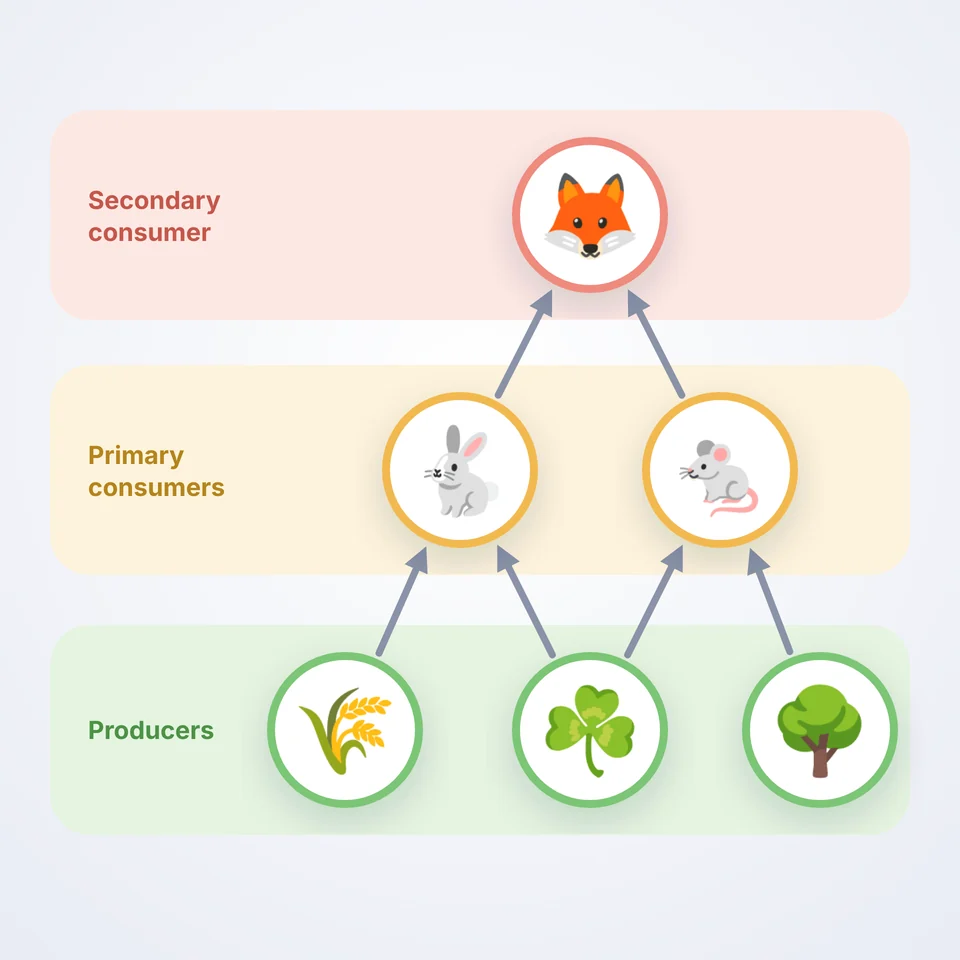
Food webs explained
How food webs work: producers, consumers and decomposers, trophic levels and the ten percent rule, predator–prey cycles and the Lotka–Volterra equations, keystone species and trophic cascades from sea otters to Yellowstone's wolves, and how ecologists model ecosystems.
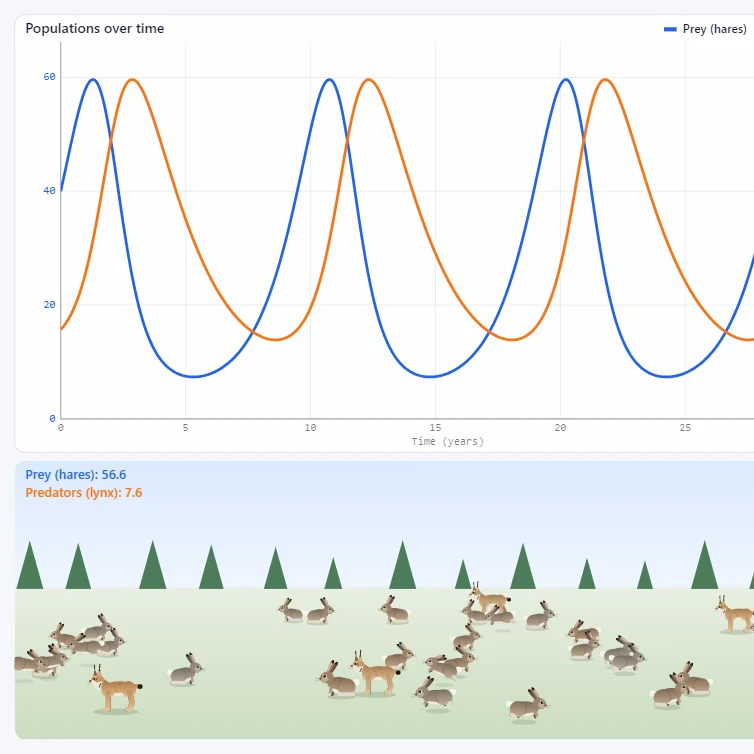
Predator–Prey
Watch hares and lynx rise and fall in the Lotka-Volterra model. Set the rates, see the predator peaks lag behind the prey peaks and follow the closed orbit in the phase plane.
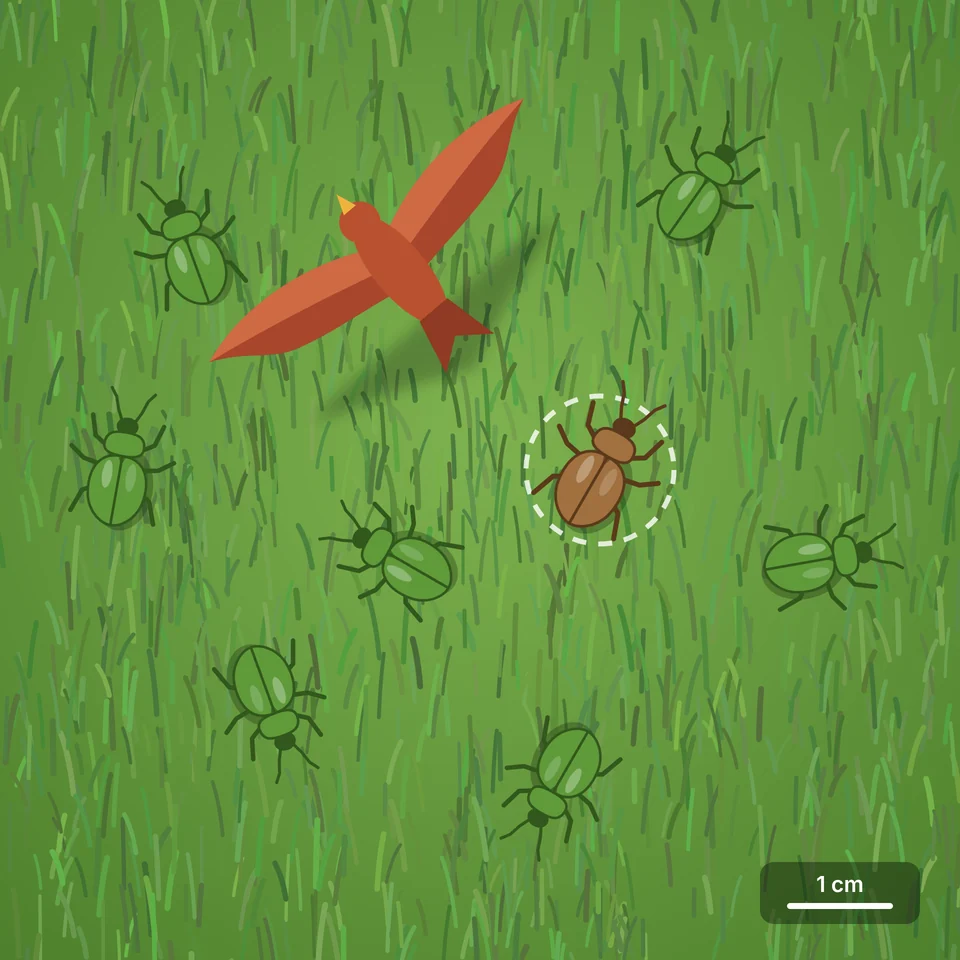
Natural selection simulator
Watch evolution by natural selection: birds catch the beetles that stand out, food is limited, and the young inherit colour, size and speed with mutations. Replay the peppered moth and the beach mice, change the habitat during a run and see genetic drift.
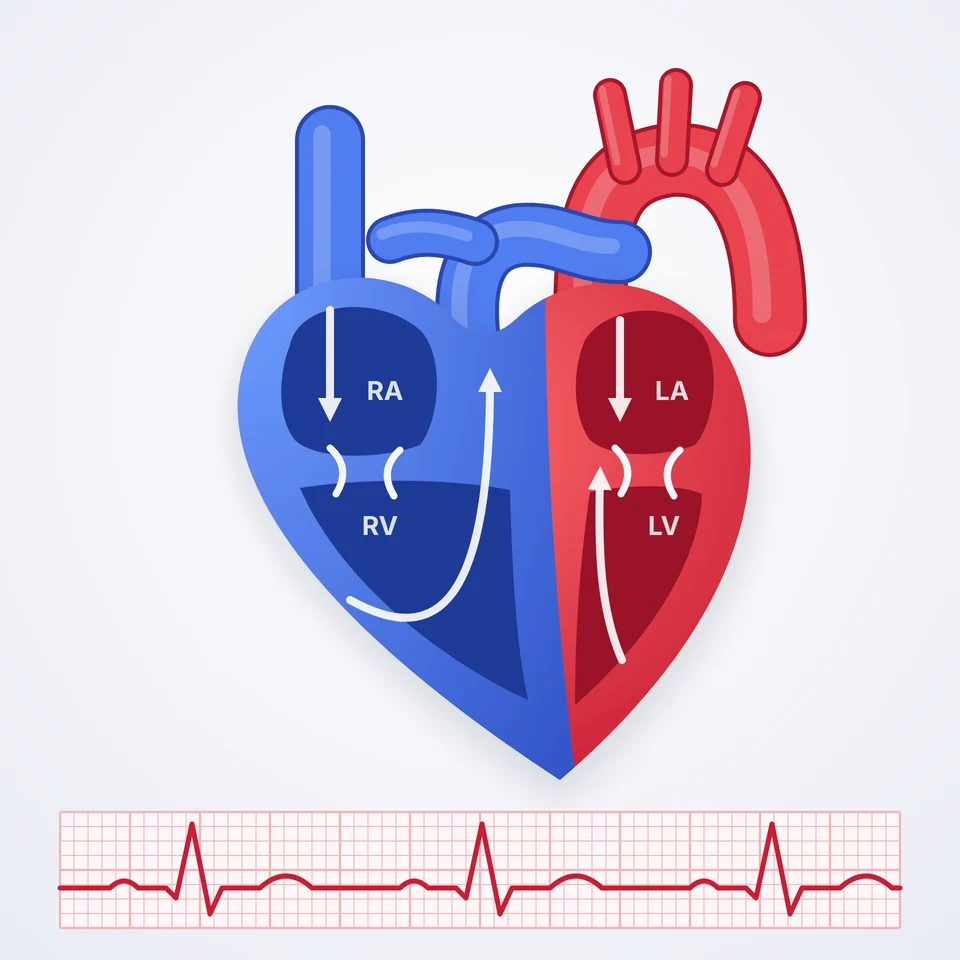
Heart and blood circulation
Watch the heart beat and the blood flow through the lungs and the body: four chambers, four valves with their lub-dub, an ECG, the Wiggers diagram and the pressure-volume loop, with stroke volume, cardiac output and blood pressure at rest and in exercise.
Ready to try it?
Open PictorX in your browser — no install, no credit card required to start.
Go to Editor