
About Word Search - history, tips and grids
Word search puzzles are simple to learn and oddly satisfying to finish. Here is a little history, how our grids are generated and some tricks the fastest solvers use.
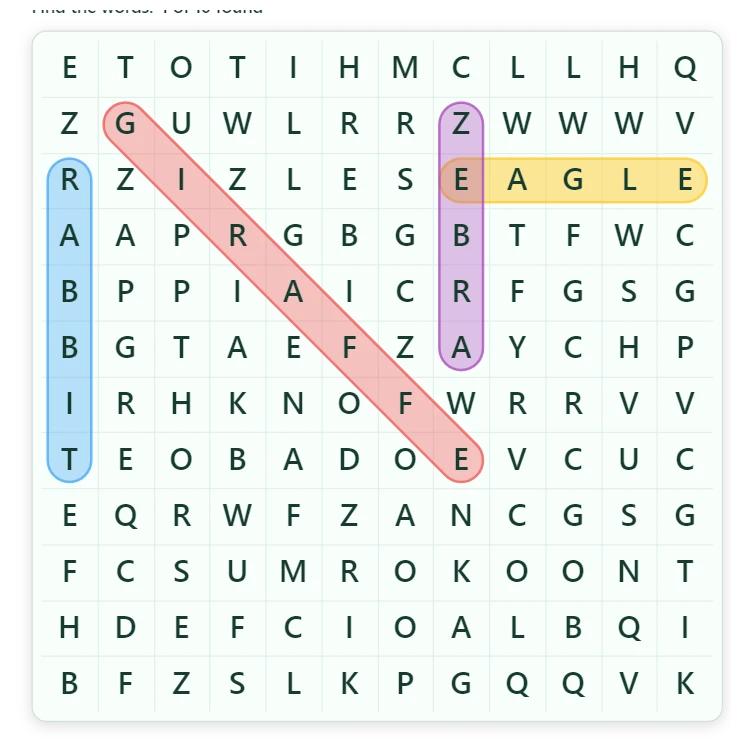
A short history
The word search as we know it is usually credited to Norman E. Gibat, who published one in an Oklahoma newspaper in 1968. Teachers soon spotted its value for spelling and vocabulary, and it became a favourite in puzzle books worldwide.
How the grids are made
The game shuffles the chosen word list, places the longest words first in random positions and directions, and lets words cross where they share a letter. Empty cells are then filled with letters from the same language.
Tips for faster solving
Scan for rare letters such as Q, Z or X first, look for double letters, and sweep the grid one row at a time. On Hard, remember that words may run backwards, so read lines in both directions.
Frequently asked questions
Why are the letters of some languages grouped?
Scripts such as Hindi join vowel signs to a letter. The game keeps each letter and its marks together in one cell, so words stay readable.
Are the words the same in every language?
The themes are the same, but each language has its own natural words, so a German grid is not just a translated English one.
Is word search good for learning?
Yes. Searching for words trains spelling, pattern recognition and concentration, which is why it is popular in classrooms and language courses.
Related tools
Word Search
Play word search online for free: themed word lists in your language, 10x10 to 15x15 grids, words in up to eight directions and a timer. No sign-up.
Sudoku
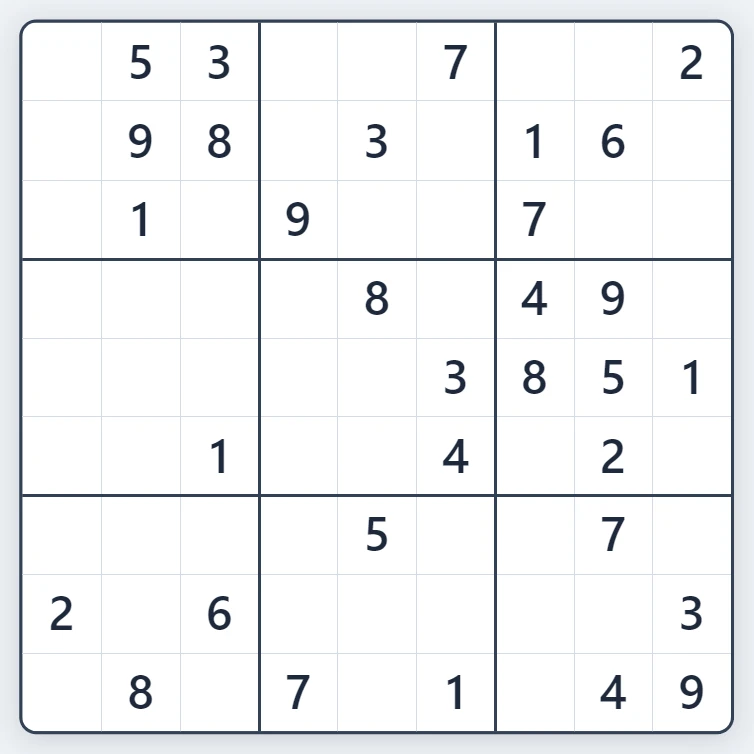
Play Sudoku free in your browser. Fresh puzzles with exactly one solution, four levels from Easy to Expert, pencil notes, hints, mistake highlighting and undo.
Mastermind
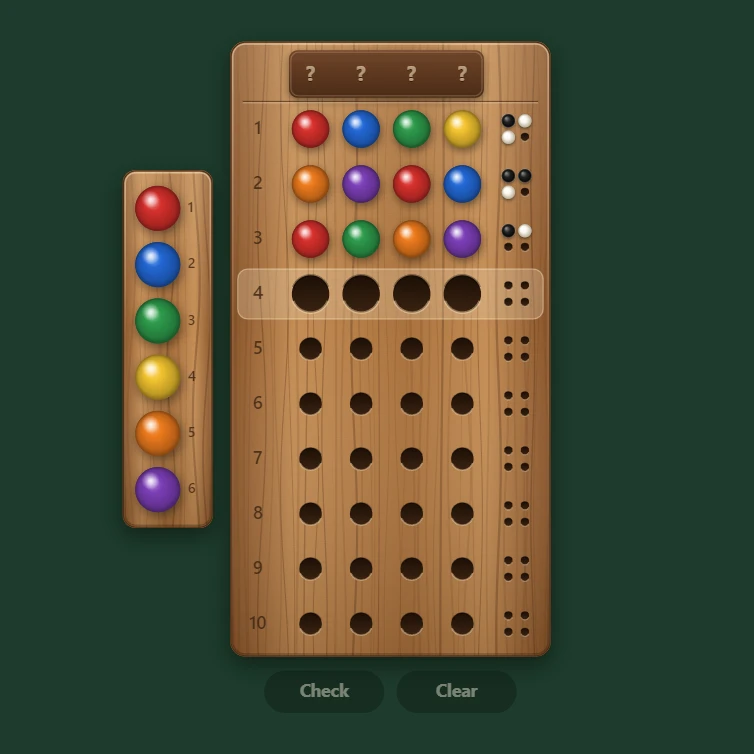
Play Mastermind free in your browser. Crack a secret colour code with 4 to 6 pegs and 6 to 8 colours, or set a code and watch the computer crack it.
Ready to try it?
Open PictorX in your browser — no install, no credit card required to start.
Play Word Search