
Tower of Hanoi
The Tower of Hanoi is a classic mathematical puzzle. Three pegs, a stack of disks of different sizes, and two strict rules: move one disk at a time, and never set a larger disk on a smaller one.
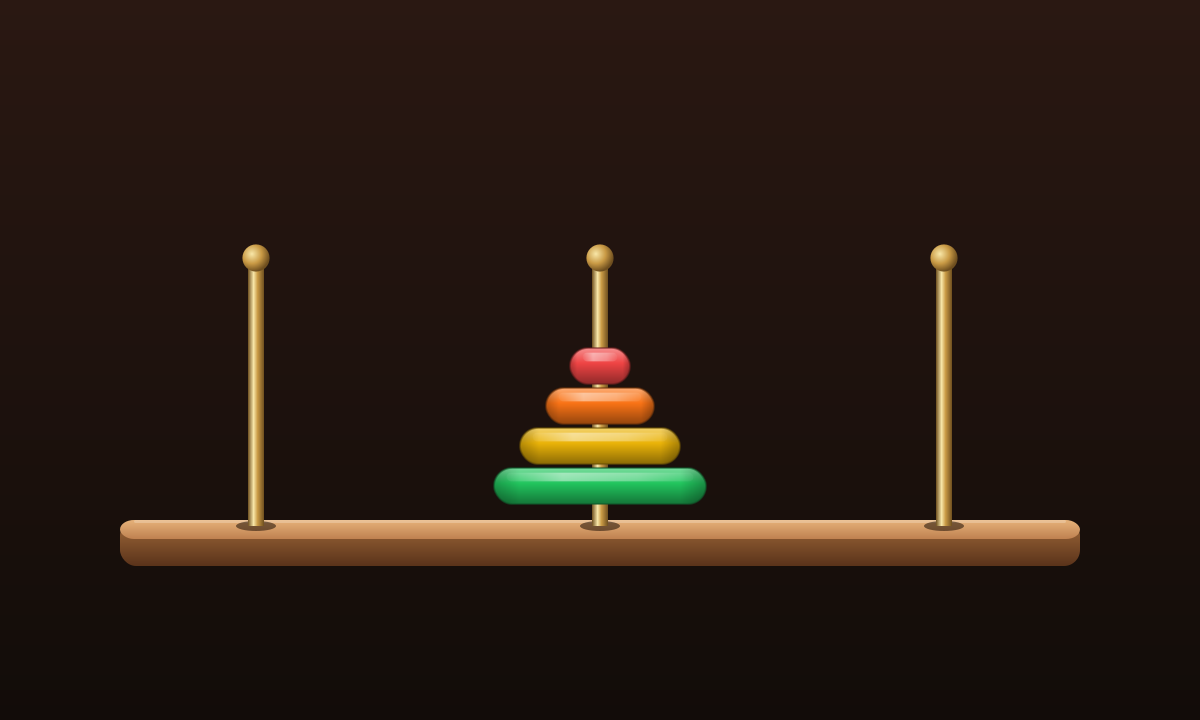
Three pegs and a cone of disks
The board has three pegs. The disks are all different sizes, and they slide onto the pegs. At the start the whole set sits on one peg, ordered by size, largest at the bottom and smallest on top, so the stack is a cone. The goal is to move that whole tower onto another peg.

The three rules
1. Move only one disk at a time. 2. A move takes the top disk of a stack and sets it on another stack, or on an empty peg. 3. A larger disk may never sit on a smaller disk. Those three rules are the whole game. With them, every legal position is a way of splitting the disks across the pegs while each peg stays sorted.
The shortest solution is 2ⁿ − 1
The fewest moves that solve a tower of n disks is 2ⁿ − 1. One disk takes 1 move. Two disks take 3. Three take 7, four take 15, and five take 31. Each new disk doubles the previous solution and adds the one move that carries that largest disk: if n − 1 disks take T moves, then n disks take 2T + 1. That recurrence is exactly 2ⁿ − 1. Eight disks, the largest tower in the PictorX app, take 255 moves. There is no shorter legal path.
How the recursion works
To move n disks from the start peg to the goal peg, using the remaining peg as spare: 1. Move the top n − 1 disks from the start peg to the spare peg. 2. Move the largest disk from the start peg straight to the goal peg. 3. Move the n − 1 disks from the spare peg onto the goal peg, on top of the largest disk. Step 2 is legal because the largest disk may sit on any peg. Steps 1 and 3 are the same puzzle, one disk smaller. The call bottoms out at a single disk, which moves once. Unrolling it produces the 2ⁿ − 1 moves, and no step ever places a larger disk on a smaller one.

The legend of 64 golden disks
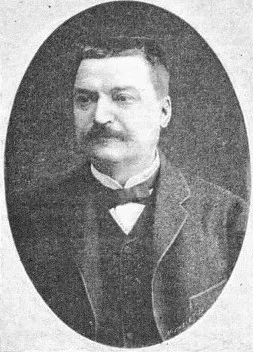
The French mathematician Édouard Lucas introduced the puzzle in 1883. With it he told a legend about an Indian temple at Kashi Vishwanath, where priests move a stack of 64 golden disks under these same rules. When the last move is made, the legend says, the world will end. Sixty-four disks take 2⁶⁴ − 1 moves: 18,446,744,073,709,551,615. At one perfect move per second, day and night, that is about 585 billion years. The priests are not going to finish.
Play it in PictorX
Open Tower of Hanoi and a tower of four disks is already on the start peg. Fifteen moves is the minimum. Drag the top disk to another peg, or click a peg and then the peg you want. Keys 1, 2, and 3 do the same. A larger disk on a smaller one is refused. Disks runs from 1 to 8, so you can check 1, 3, 7, 15, 31, 63, 127, and 255 against the formula. Step plays one move of a shortest solution. Solve plays the rest. Watch 3 disks is the recursive strategy in motion. Undo and Redo walk back through your moves. Save a PNG, or open the board in the PictorX editor.
Frequently asked questions
What are the rules of the Tower of Hanoi?
Move one disk at a time. Take the top disk of a peg and place it on another peg. Never put a larger disk on a smaller one. The whole tower starts on one peg and must end on another.
How many moves does the shortest solution take?
2ⁿ − 1. One disk is 1 move, two disks are 3, three are 7, four are 15, and five are 31. Each added disk doubles the previous solution and adds one move.
Who invented the Tower of Hanoi?
Édouard Lucas, a French mathematician, introduced it in 1883. The story of priests and 64 golden disks at Kashi Vishwanath is the legend he attached to the puzzle.
How long would 64 disks take?
2⁶⁴ − 1 moves, which is 18,446,744,073,709,551,615. At one move per second that is about 585 billion years.
Related tools
Tower of Hanoi
Move a tower of disks across three pegs in your browser. One disk at a time, never a larger disk on a smaller one. The shortest solution is 2ⁿ − 1 moves.

Buffon's Needle
Drop needles on a lined floor in your browser. Count the crossings and watch Buffon's 1777 experiment estimate π.
Buffon's Needle
Buffon's 1777 needle problem: why a needle dropped on parallel lines estimates π, how the short-needle chance 2l/(πd) comes from the area under a sine curve, and why the experiment converges slowly.
Multiplication Circles
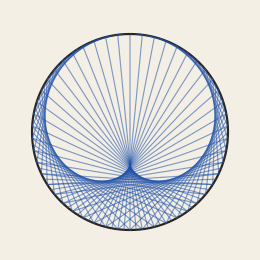
Join each number on a circle to its multiple. Draw a times table, a cardioid, or a string figure on paper, chalk, or wood.

The Collatz Conjecture
Explore the Collatz 3n+1 problem in your browser. Walk hailstone sequences, grow a geometric Collatz tree, and zoom the continuous Collatz fractal.

Langton's Ant
Run Langton's Ant in your browser. Watch symmetry, chaos and the 104-step highway, then try multi-colour rules, several ants, a hex grid and turmites.
Ready to try it?
Open PictorX in your browser — no install, no credit card required to start.
Play Tower of Hanoi