
Jackson Pollock
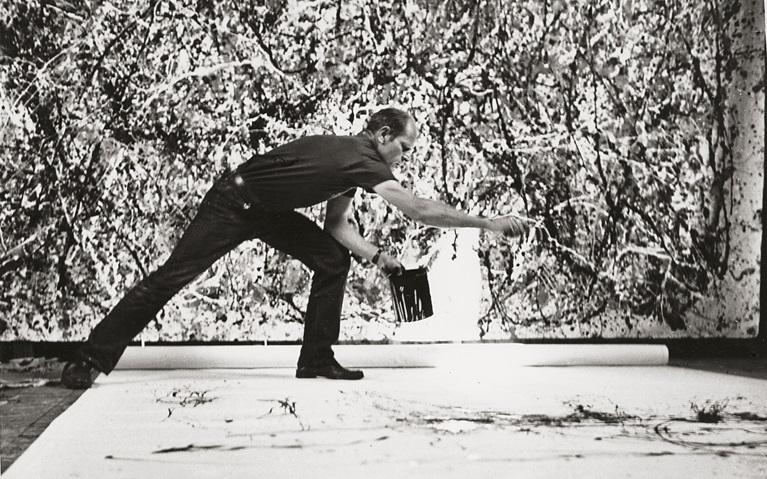
Jackson Pollock reshaped modern painting with whole-body gesture and industrial enamel poured across canvases laid on the floor. From Cody, Wyoming to the New York School, his drip technique became the emblem of Abstract Expressionism—and in PictorX you can explore that drip-and-splatter energy with Pollock Painter.
From Cody to New York — early years
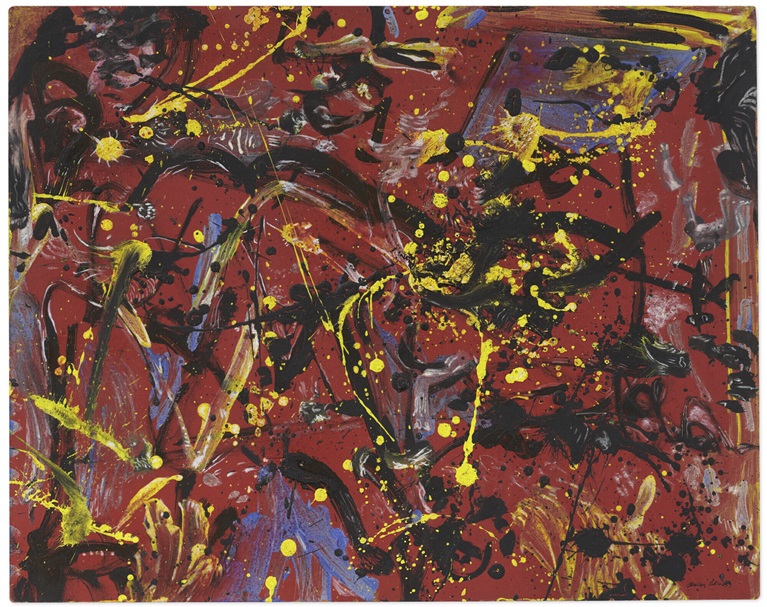
Jackson Pollock was born on 28 January 1912 in Cody, Wyoming, and grew up in a restless Western family that moved often across the American West. In New York he studied at the Art Students League under Thomas Hart Benton, whose rhythmic murals left a lasting sense of motion in Pollock's line. Through the 1930s—years that include works such as Red Composition (1936)—he absorbed mural scale, Mexican modernism, and Surrealist-influenced automatic drawing before the drip canvases that later made his name.
Abstract Expressionism and the New York School
After World War II, New York became the centre of a new American modernism. Pollock stood among the Abstract Expressionists—sometimes called the New York School—who treated the canvas as an arena for decision and risk rather than a window onto a scene. Action painting emphasised gesture and process; colour-field painters pursued broad, contemplative expanses. Pollock's poured webs became the public face of the more kinetic side of that conversation.
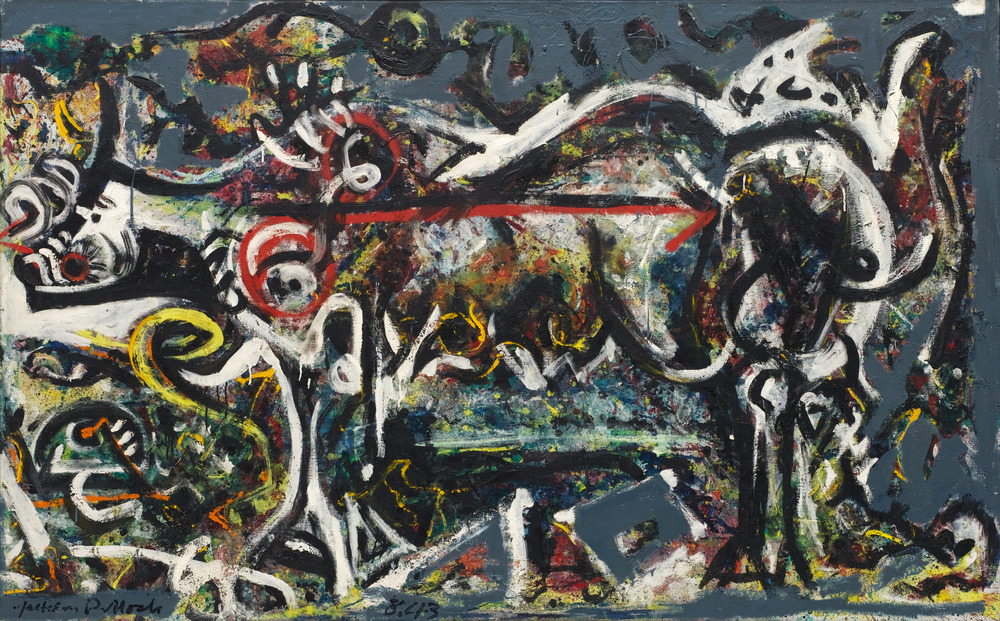
The She-Wolf, 1943
As with many other artists in the 1940s, Jackson Pollock explored mythological subjects in his art. While Pollock refused to make any statements as to what the work was about, many believe that it alludes to the mythological animal that suckled Remus and Romulus, the twins who founded Rome. Pollock stated that the animal existed because he created it, and any attempt to explain it would destroy it.
Drip painting and action painting
From the late 1940s Pollock laid unstretched canvas on the floor and worked with sticks, stiffened brushes, and cans of enamel, flinging and pouring paint in arcs that recorded the motion of his whole body. Critics later called the approach action painting: the picture as a trace of performance. PictorX Pollock Painter is inspired by that drip-and-splatter language—it does not copy any particular Pollock canvas.
The classic period
In his classic drip years Pollock built vast, all-over fields that refuse a single focal point. Works known by titles such as Number 1A, 1948 and Lavender Mist show how scale, density, and interlaced colour can feel both explosive and finely woven. Standing before them, viewers often sense energy first—rhythm, overlap, and depth—before settling into any one passage.
Later years and legacy
Fame brought commissions, exhibitions, and intense scrutiny. Pollock also struggled with personal demons; he died in a car crash on 11 August 1956 near East Hampton, New York. His influence runs through later gestural painting, performance, and any practice that treats mark-making as an event. Museums still draw crowds to the drip canvases that once shocked mid-century taste.
Try Pollock Painter in PictorX
Open /pollock-painter in PictorX to drip, flick, pour, and scatter in your browser. Choose brushes and palettes, try Auto-Pollock for generative bursts, tune viscosity and intensity, and save a PNG. Nothing is uploaded to PictorX servers—your canvas stays on your device while you explore action-painting energy.
Frequently asked questions
When was Jackson Pollock born and when did he die?
He was born on 28 January 1912 in Cody, Wyoming, and died on 11 August 1956 near East Hampton, New York.
What is drip painting?
Drip painting is Pollock’s late-1940s method of pouring and flinging liquid paint onto a canvas placed on the floor, so lines record the gesture of the whole body rather than careful brush modelling alone.
What is Abstract Expressionism?
Abstract Expressionism was a postwar New York movement that prized large-scale abstraction, emotional intensity, and the visible act of painting. Pollock’s action painting is one of its best-known strands; colour-field work is another.
Does PictorX upload my Pollock Painter canvas?
No. Pollock Painter runs in your browser; nothing you paint is uploaded to PictorX servers. Export a PNG when you want a file on your device.
How does this page relate to the Pollock Painter app?
This page is the background story—Pollock’s life, drip technique, and legacy. Pollock Painter is the interactive PictorX tool where you can try drip-and-splatter brushes and Auto-Pollock yourself.
Related tools
Pollock Painter
Paint Jackson-Pollock-style drips and splatters in your browser. Gesture brushes, Auto-Pollock, palettes, and PNG export — nothing is uploaded.
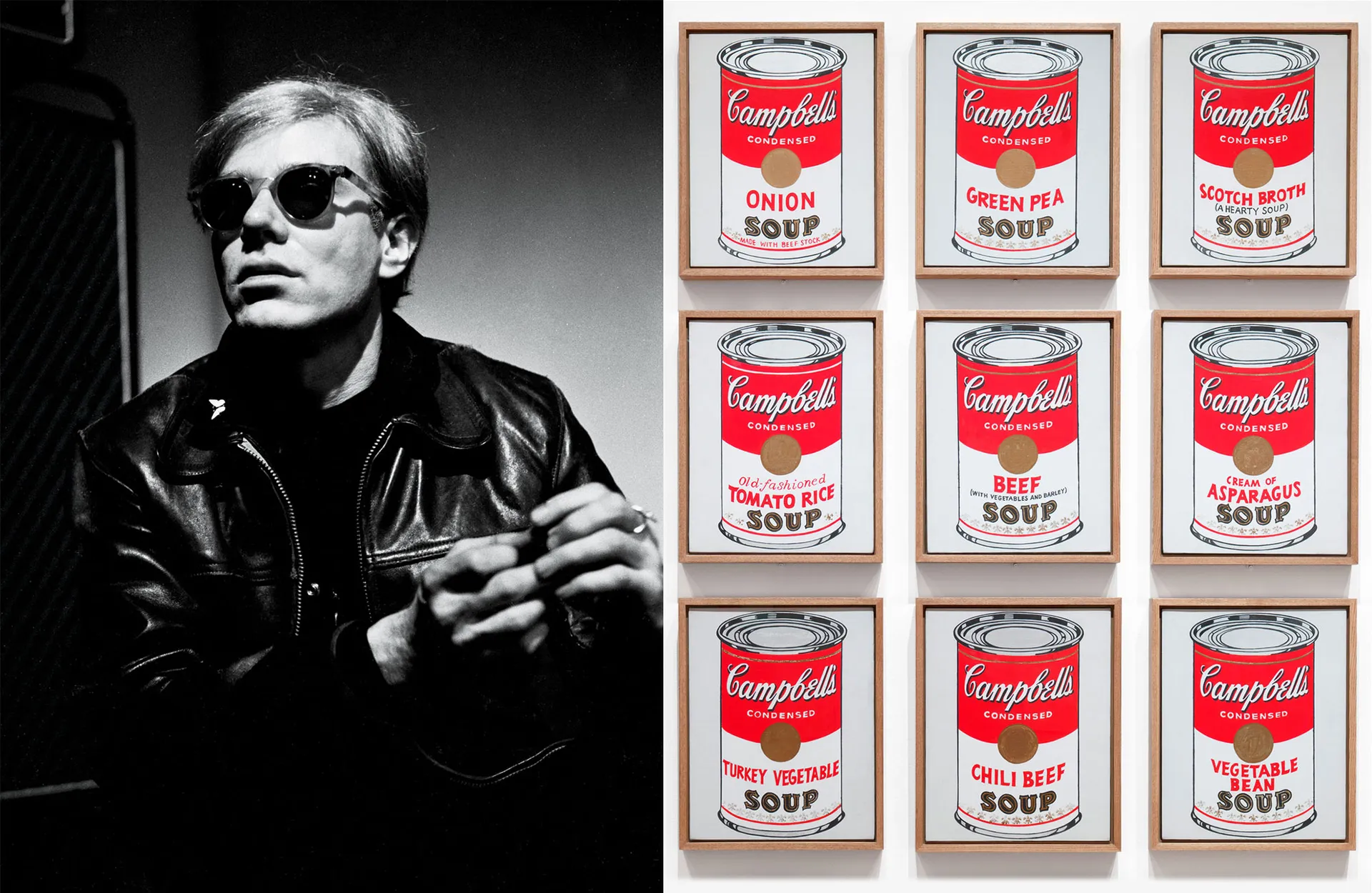
Andy Warhol
The story of Andy Warhol: Pittsburgh, The Factory, Campbell's Soup, Marilyn, the 1968 shooting, Interview magazine, and the museum in Pittsburgh.

Pop Art
Learn how Pop Art turned advertising, comics, and consumer products into art—Andy Warhol, Roy Lichtenstein, silkscreen, and the rise of mass culture.
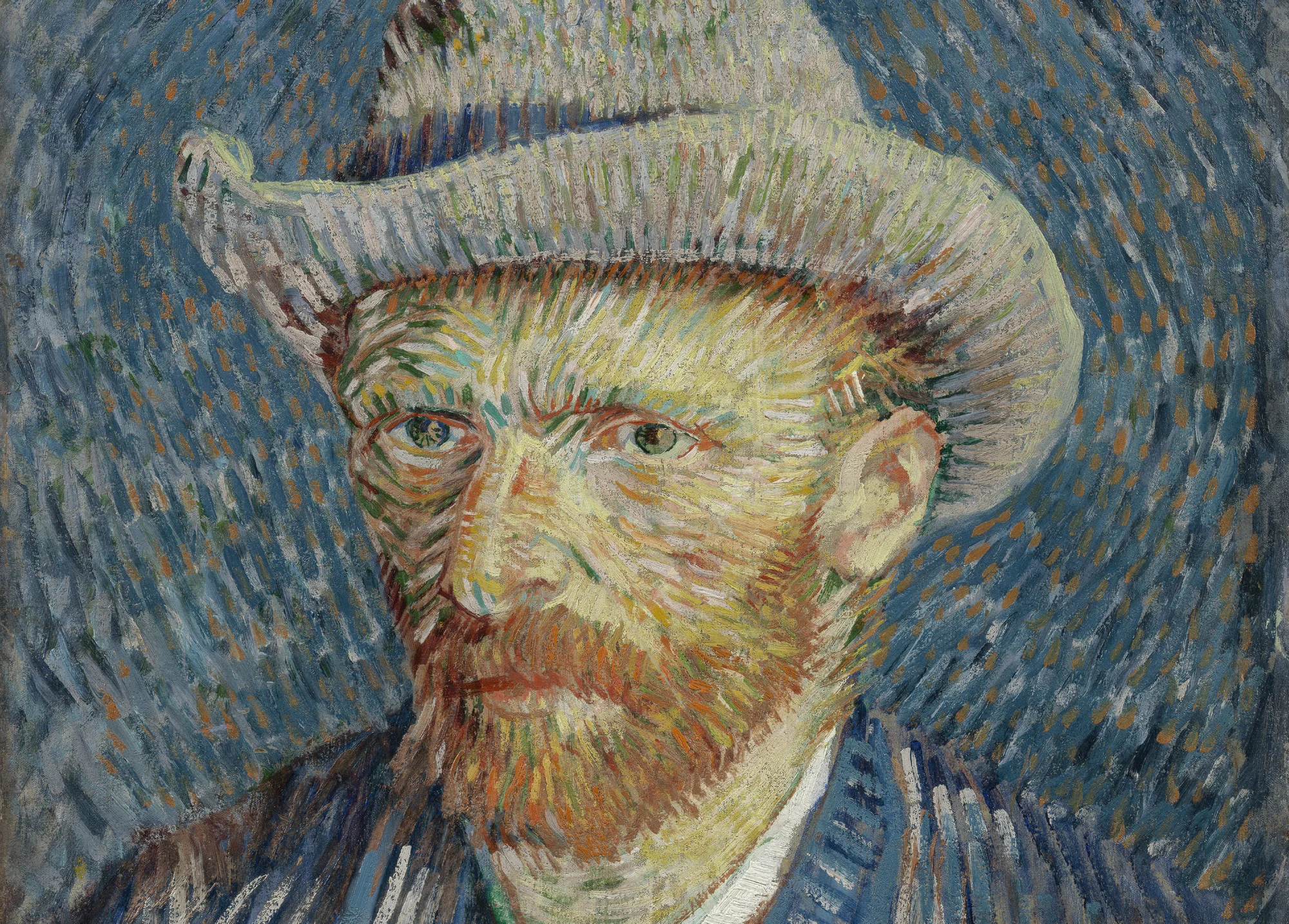
Vincent van Gogh
A short guide to Vincent van Gogh: Dutch Post-Impressionism, swirling brushwork, Starry Night and sunflowers, and a respectful digital homage you can try in PictorX.
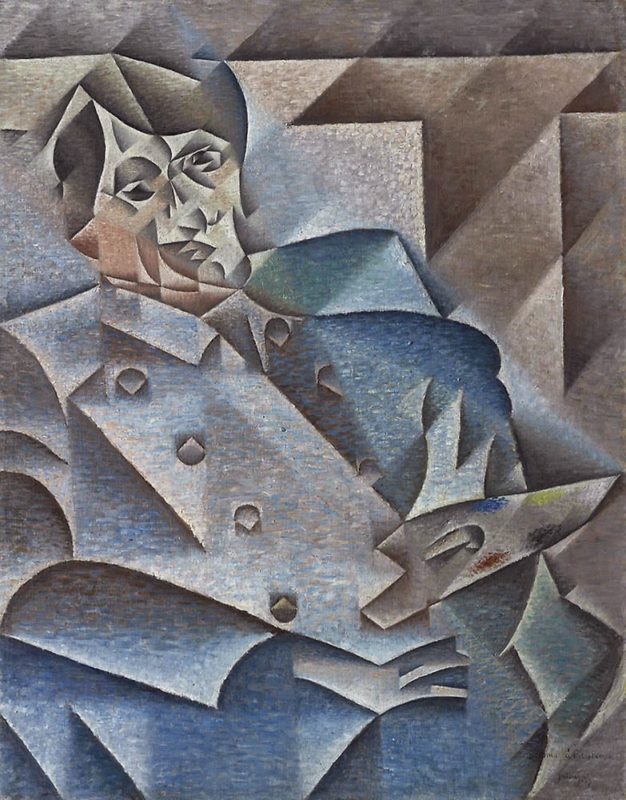
Cubism
A short guide to Cubism: Picasso and Braque, Analytic and Synthetic Cubism, fragmented planes, multiple viewpoints, and a digital homage you can try in PictorX.
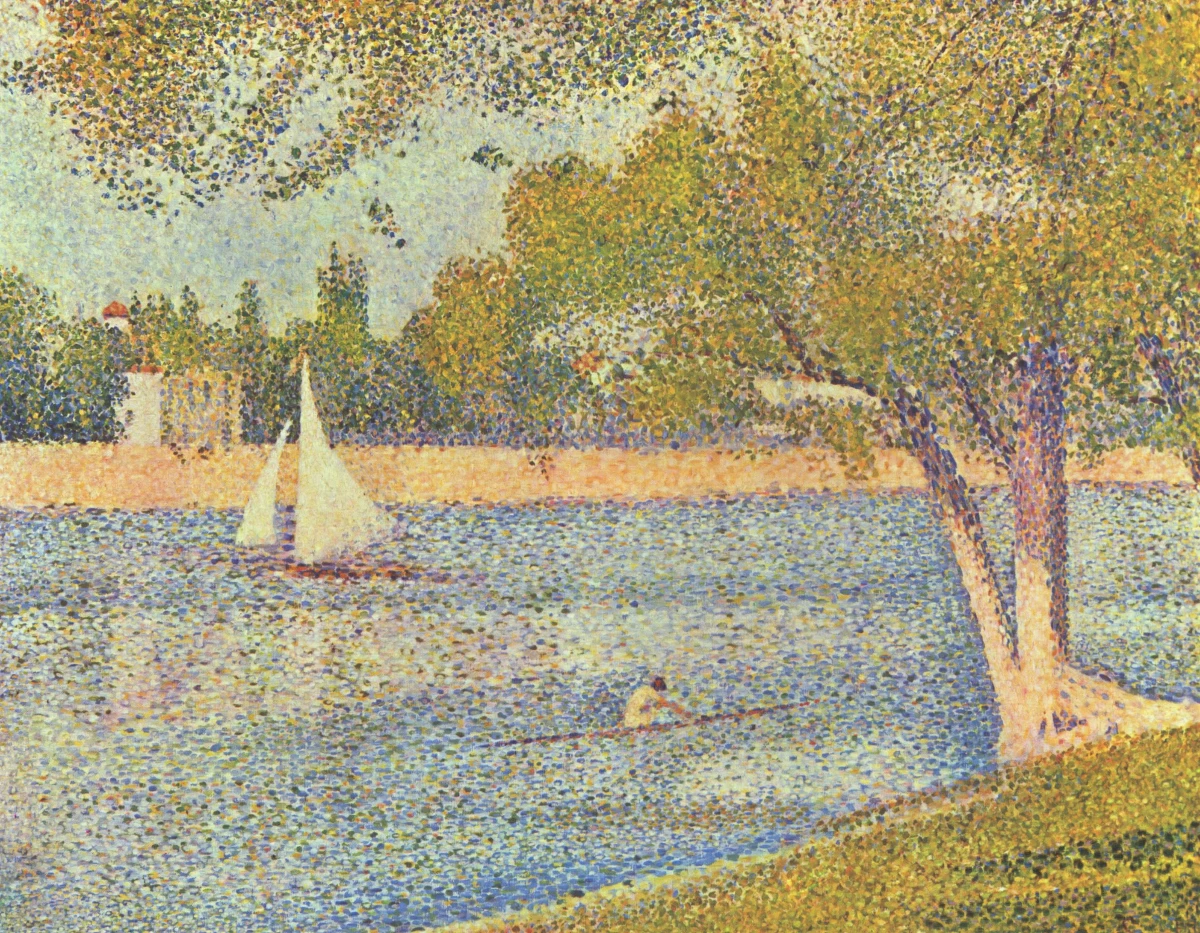
Pointillism
A short guide to Pointillism: Seurat and Signac, Neo-Impressionism, optical colour mixture with dots, and a digital homage you can try in PictorX.
Ready to try it?
Open PictorX in your browser — no install, no credit card required to start.
Try Pollock Painter