
The story and strategy of rock paper scissors
Rock paper scissors looks like pure chance, yet it has a long history, a solid place in game theory and a surprising amount of psychology. This page explains all three.

From China and Japan
Hand games in which each gesture beats one other go back at least to Han dynasty China. In Japan they are called sansukumi-ken, games of three that hold each other in check, such as the frog, the slug and the snake. The version with a stone, scissors and paper, jan-ken, became popular in Japan in the late nineteenth century and spread across the world in the twentieth. In many countries it settles small disputes, like who goes first.
What game theory says
In game theory rock paper scissors is the classic example of a game without a best move: every move can be beaten. The only strategy that cannot be exploited is to play each move with a chance of exactly one in three, at random. That mix is the Nash equilibrium of the game. It guarantees that, on average, you neither win nor lose, whatever your opponent does.
How people really play
People are bad at being random. In a large experiment published in 2014, researchers at Zhejiang University in China watched 360 students play hundreds of rounds. Winners tended to stick with the move that had just won, and losers tended to switch to the move that would have beaten their opponent: a pattern called win-stay, lose-shift. Players also avoid repeating the same move too often. An opponent who expects these habits can win more than a third of the time.
A computer that learns your habits
The smart computer in this game keeps the rounds you played and looks at what you did after rounds like the last one, with the same move and the same result. It assumes you will do the same again and plays the move that beats it, with now and then a random move so it never becomes fully predictable. Against someone who always plays rock it wins almost every round; against a player who is truly random it gains nothing.
Frequently asked questions
What is the best move in rock paper scissors?
There is none. Every move beats one move and loses to another. The best strategy is to be unpredictable: play each move about a third of the time, in an order your opponent can't guess.
Why does rock blunt scissors?
The verbs are just a way to remember the circle of three. In other versions the names change, but the rule stays the same: each gesture beats exactly one other and loses to the remaining one.
Related tools
Rock paper scissors
Play rock paper scissors online against the computer: free play or a best of 3, 5 or 7, against a fair random opponent or a smart one that learns your habits.
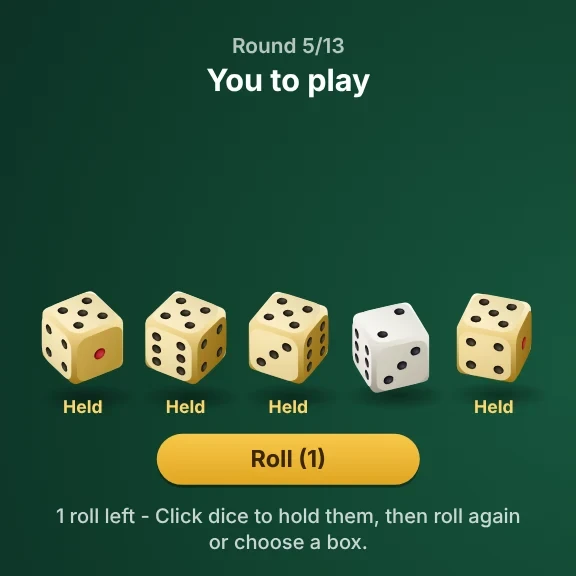
Yahtzee
Play Yahtzee free in your browser. Roll five dice up to three times, hold the ones you want and fill 13 boxes. Play solo, with up to 4 players or against the computer.
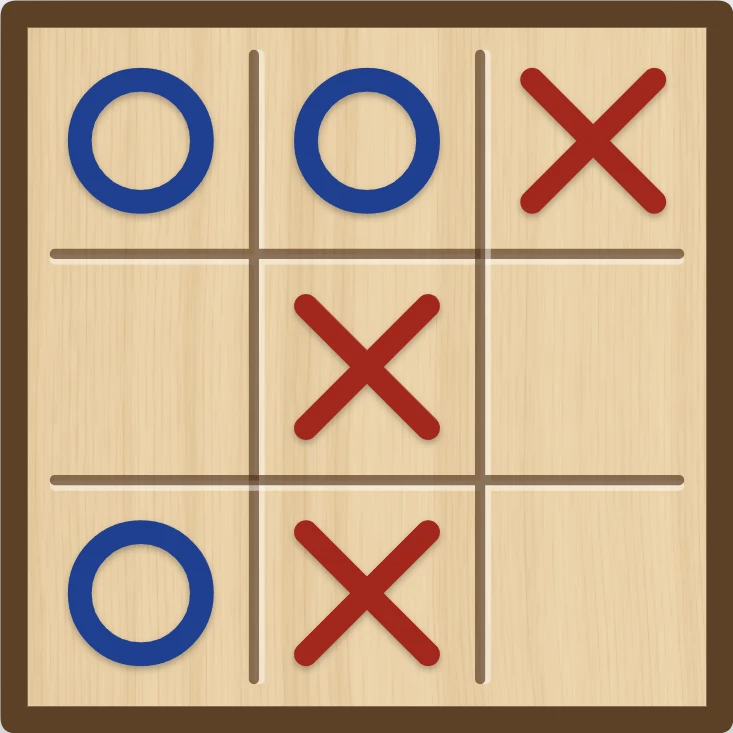
Tic-tac-toe
Play tic-tac-toe against the computer in your browser. Pick who starts and how well it plays, from Easy to Unbeatable, ask for a hint, or watch it play itself.
Random generator
Draw a random number from 1 to 10, 1 to 100 or any range, roll dice, draw playing cards, flip a coin or draw lots for a raffle or Secret Santa. Fair, free and with a history of your results.

Gambler's fallacy
Flip a fair coin 100 times a second and see what comes after every streak of 5 or 8 heads in a row. It is still 50/50: the coin has no memory.
Ready to try it?
Open PictorX in your browser — no install, no credit card required to start.
Play rock paper scissors