
The story of drawing lots
Drawing lots is one of the oldest ways to make a fair choice: nobody can be blamed for the outcome, and nobody can steer it. This page tells where it comes from and how an online draw stays fair.
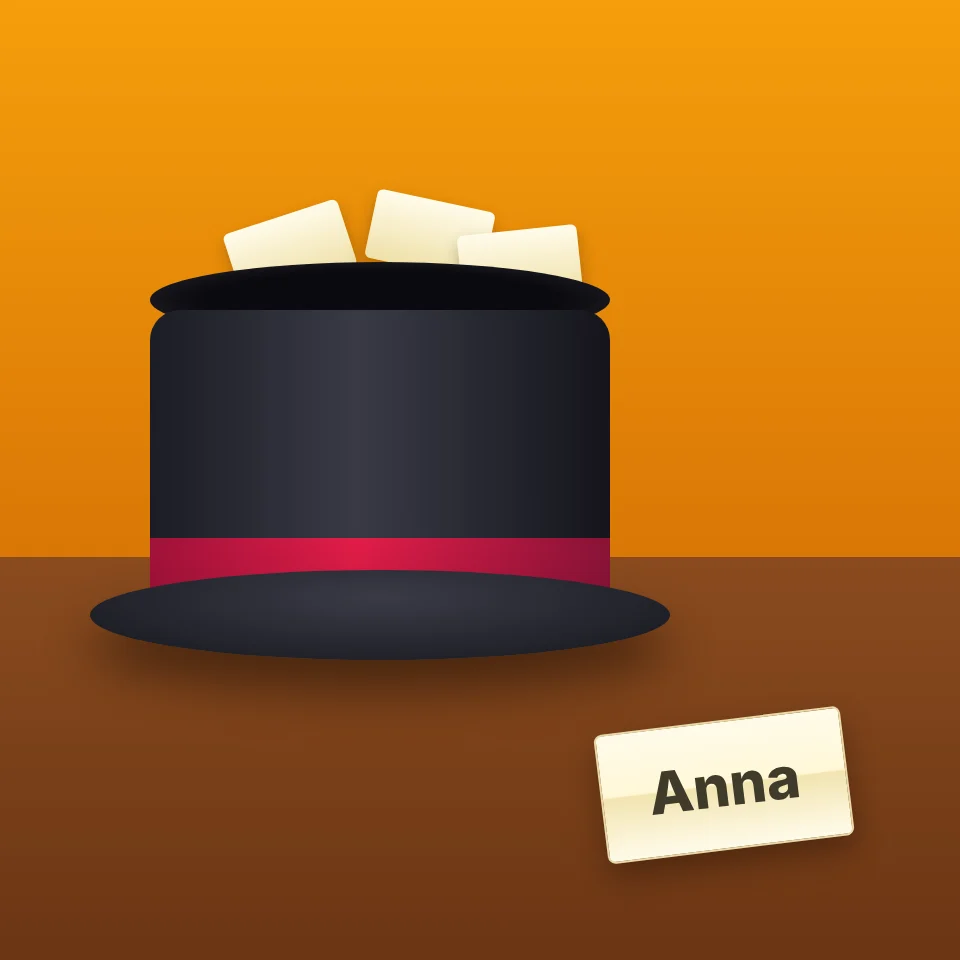
Drawing lots
Drawing lots is one of the oldest ways to decide fairly: the Bible tells of lots cast to share out land, and ancient Athens chose many of its officials by lot. In the Netherlands and Flanders, families and colleagues draw names for Sinterklaas on 5 December, and in many other countries the same game is called Secret Santa. A draw in which nobody gets their own name is what mathematicians call a derangement. With more than a few people, about 37% of all ways to share out the names, 1 in e, leave nobody with their own, so a fair shuffle that starts again whenever someone draws themselves needs only about three tries.
Lots in ancient Athens
In Athens in the fourth century BC, most officials and the large juries were chosen by lot, not by vote. A stone allotment machine, the kleroterion, held the name tokens of citizens in rows of slots, and coloured balls dropped through a tube decided which rows served. Choosing by lot was seen as the most democratic method: it gave every citizen the same chance and left no room for bribery or campaigning.
Sinterklaas and Secret Santa
In the Netherlands and Flanders, families, friends and colleagues draw names a few weeks before 5 December: everyone buys a present and writes a poem for the person they drew, and keeps it a secret. Secret Santa, popular in the English speaking world and beyond, works the same way at Christmas. Paper slips in a hat have a catch: someone may draw their own name, and the whole draw has to start again. An online draw avoids that and can keep every name hidden until its owner looks.
A fair draw online
Draw lots uses crypto.getRandomValues, the secure random generator built into your browser. Drawing names, it picks each name from the ones still in the hat with exactly the same chance. For Everyone draws it shuffles all the names fairly and starts again whenever someone would get their own name. That way every share-out in which nobody draws themselves is exactly as likely as every other, which a shuffle that simply swaps two people afterwards would not give.
Frequently asked questions
Why does the draw start again instead of swapping names?
Swapping two people when someone draws themselves makes some share-outs more likely than others. Starting the whole shuffle again keeps every valid share-out equally likely. It needs about three tries on average, which takes a fraction of a millisecond.
Can I keep the draw secret?
Yes. Turn on Hide who drew whom: every person's ticket shows only a Show button, so you can pass the screen around and everyone sees only their own name. The history stores the draw as hidden.
Related tools
Draw lots
Draw lots online: pick names from a hat for a raffle or an order, or let everyone draw someone else's name for Sinterklaas or Secret Santa, hidden until each person looks. Fair and free.
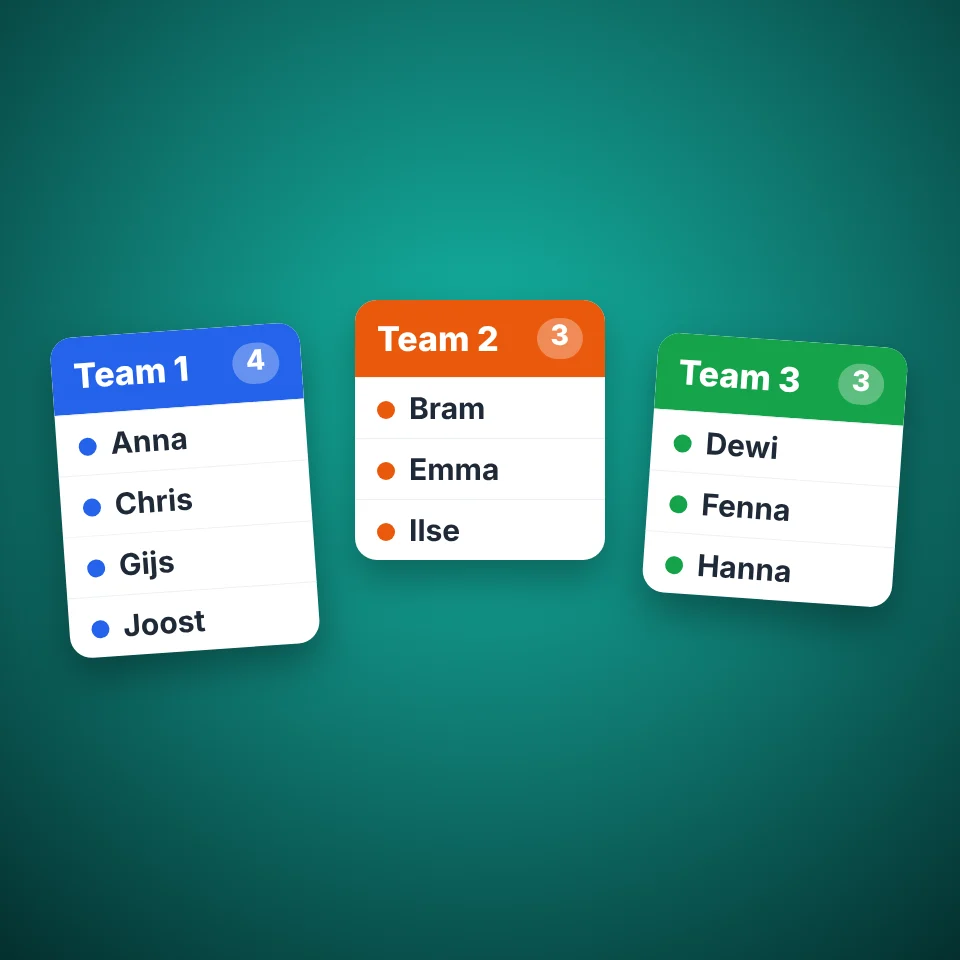
Team generator
Split a list of names into random, fair teams: choose the number of teams or the number of people per team, and get balanced teams in one click, to copy or save as a PDF.
Random generator
Draw a random number from 1 to 10, 1 to 100 or any range, roll dice, draw playing cards, flip a coin or draw lots for a raffle or Secret Santa. Fair, free and with a history of your results.
Decision wheel
A free decision wheel: spin a wheel of your own options with weights and colors, get a fair random result, keep a spin history and save lists such as yes or no, dinner or numbers 1 to 10.
Ready to try it?
Open PictorX in your browser — no install, no credit card required to start.
Open Draw lots