
About Dots and Boxes - history, rules and strategy
Dots and Boxes is a pencil and paper game for two players that looks simple but hides a deep strategy about chains and control.
Where it comes from
The game was first described in 1889 by the French mathematician Edouard Lucas, who called it la pipopipette. It has been a favourite in classrooms and notebooks ever since.

The rules
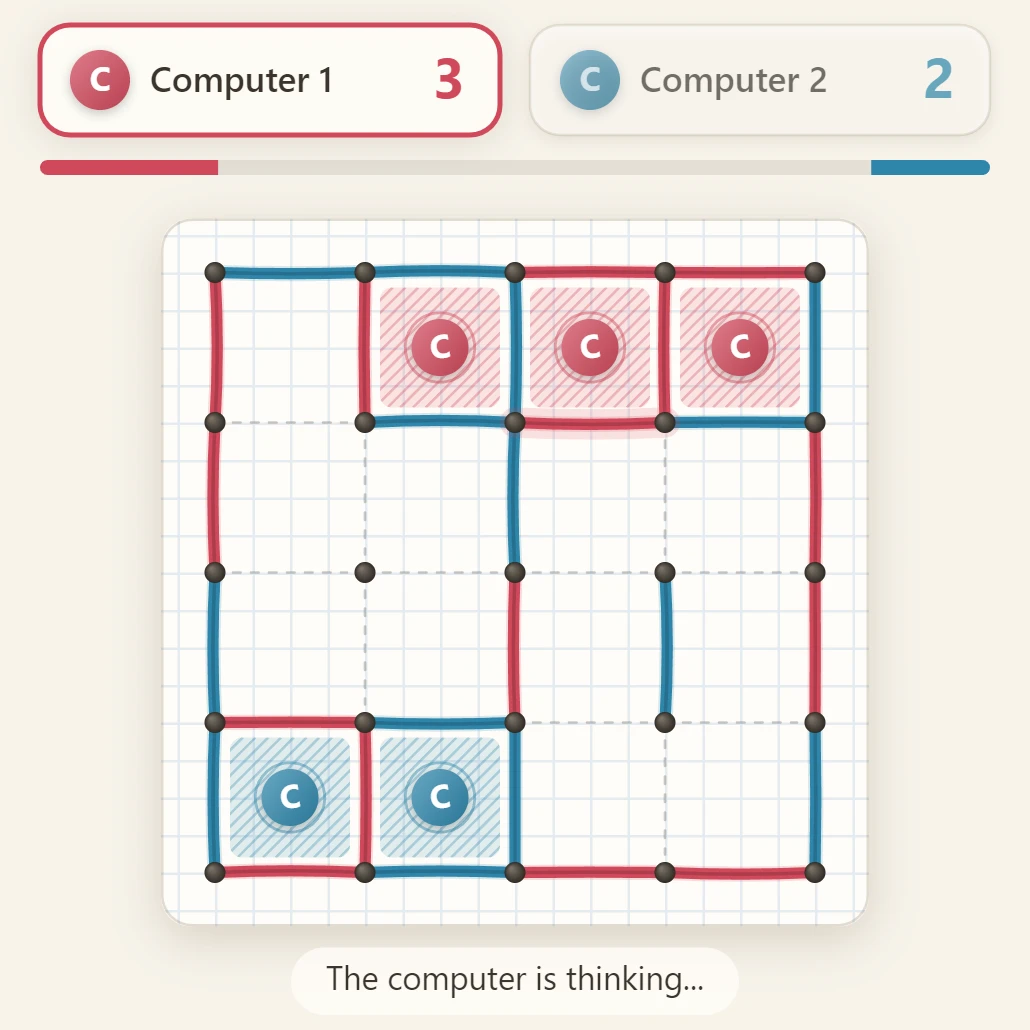
Starting from an empty grid of dots, players take turns drawing a line between two neighbouring dots. Completing the fourth side of a box claims it and earns another move. The player with more boxes at the end wins.
The double-cross
A strong player sometimes declines the last two boxes of a chain by drawing the line that leaves them for the opponent. The opponent takes the two boxes but must then open the next chain, which can be worth far more.
Frequently asked questions
What is the long chain rule?
It is a counting rule that tells you whether you want an odd or even number of long chains, depending on the board size, so that your opponent is the one forced to open the first long chain.
Why is the game hard for computers?
The number of possible positions grows very fast, so exact analysis is only practical near the end of a game. That is where the Hard level searches every option.
What board size should I start with?
A 3x3 board is quick and good for learning. Larger boards give longer chains and a deeper endgame.
Related tools
Dots and Boxes
Play Dots and Boxes free in your browser with a friend or against the computer at three levels. Draw lines, close boxes and pick a board from 3x3 to 6x6.
Tic-tac-toe
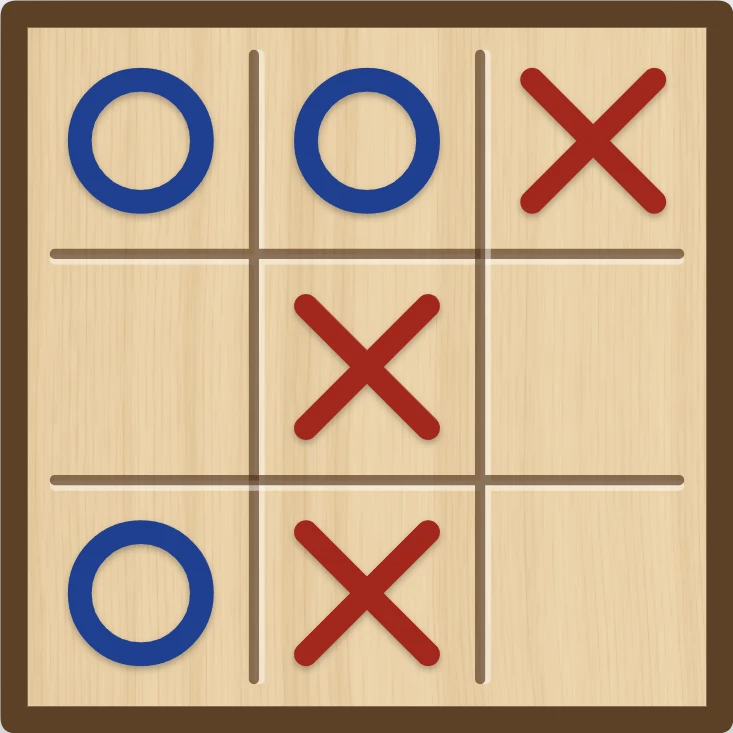
Play tic-tac-toe against the computer in your browser. Pick who starts and how well it plays, from Easy to Unbeatable, ask for a hint, or watch it play itself.
Connect Four
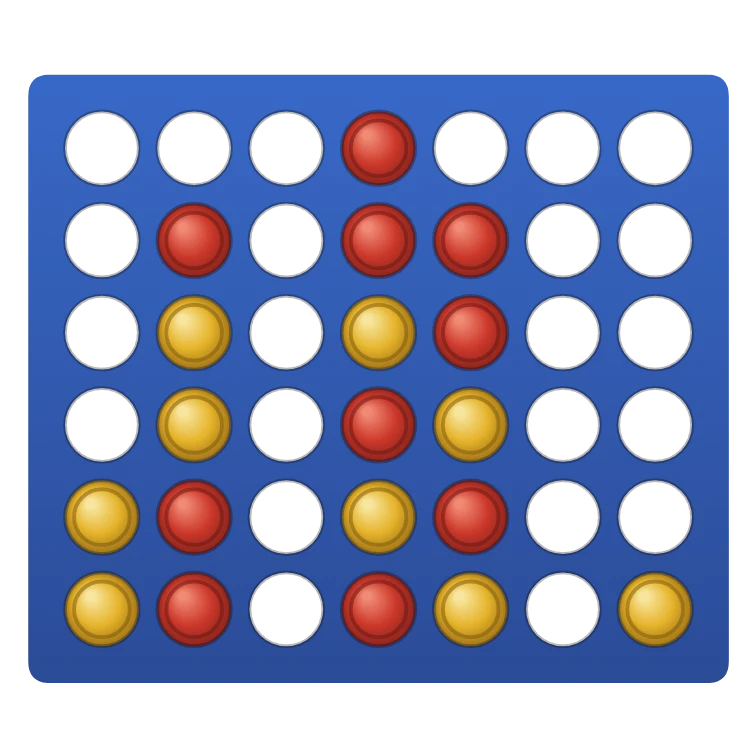
Play Connect Four in your browser: drop red and yellow discs and get four in a row to win. Play a friend on the same screen, or the computer from Easy to Hard. Or watch the computer play itself.
About Battleship - history, rules and winning strategy
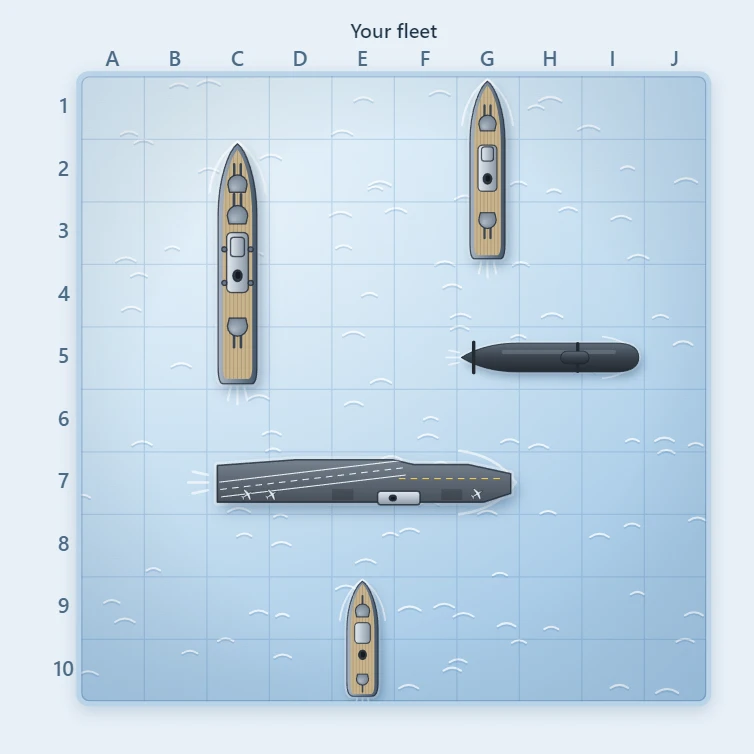
How do you play Battleship? Where the two-player guessing game comes from, how the fleets are hidden and found, and the hunt and target strategy.
Ready to try it?
Open PictorX in your browser — no install, no credit card required to start.
Play Dots and Boxes